70827 – LEGO® Movie 2 Ultrakatty Warrior Lucy

Reviewed by Chris McGee (SAFOLs Member, jhbLUG Member)

The turn of the New Year brings with it a new outlook for some, a fresh start for others and of course, new LEGO® sets for the lucky ones. Early 2019 will also see the theatrical release of “The LEGO® Movie 2: The Second Part”, and with it being based on the famous building block system and following a successful first film, we are getting a whopping nineteen sets released for January (I am still unsure of distribution availability of all of these and it excludes Duplo® sets and the polybags) with the first wave. We also have confirmation of a collectible minifigure series, and I am sure a second wave will be lined up. So this also means that 2019 could come with a number of unplanned expenditures as well.

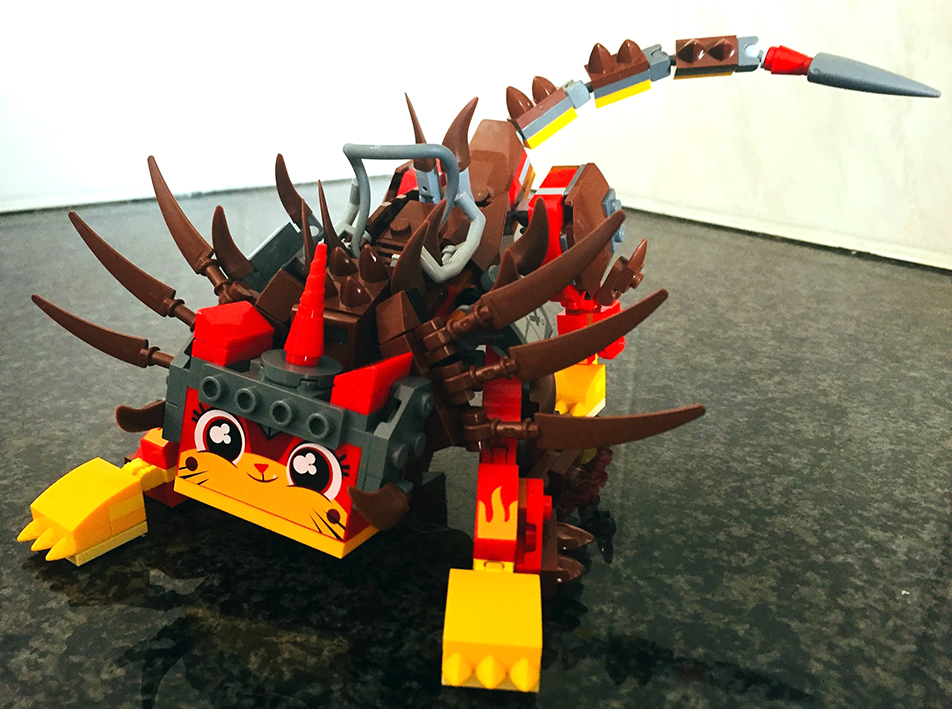
Although my first choice for a set would have likely been set “70841: Benny’s Space Squad” (hopefully a future review), being an 80’s child an all, the Ultrakatty set hooked me following the official release pictures. The battle-hardened, super-sized version of Unikitty is a great example of the post-apocalyptic theme the sequel is going for.

The Build:

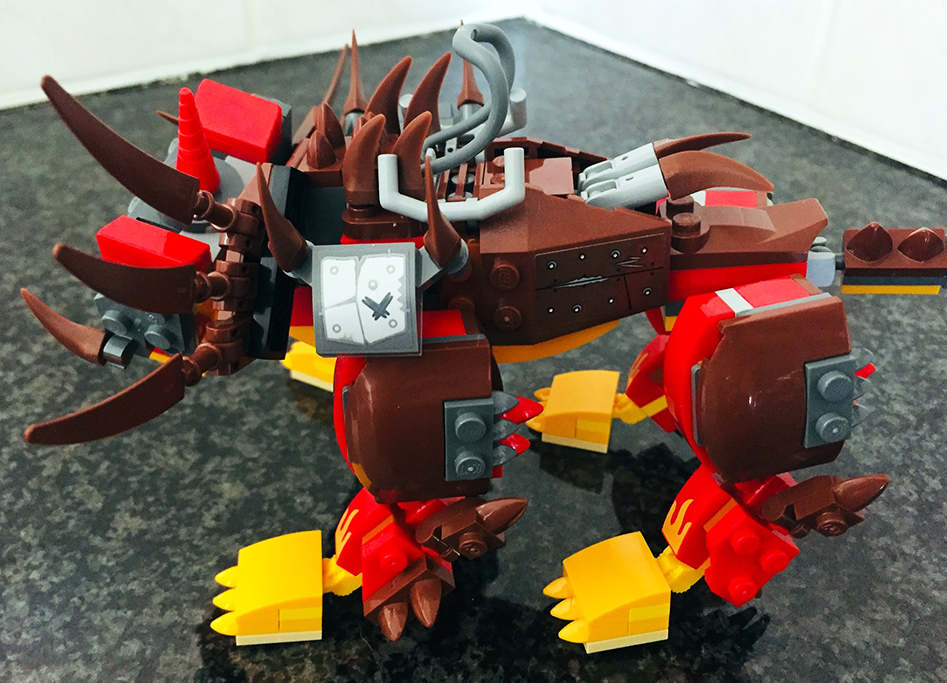
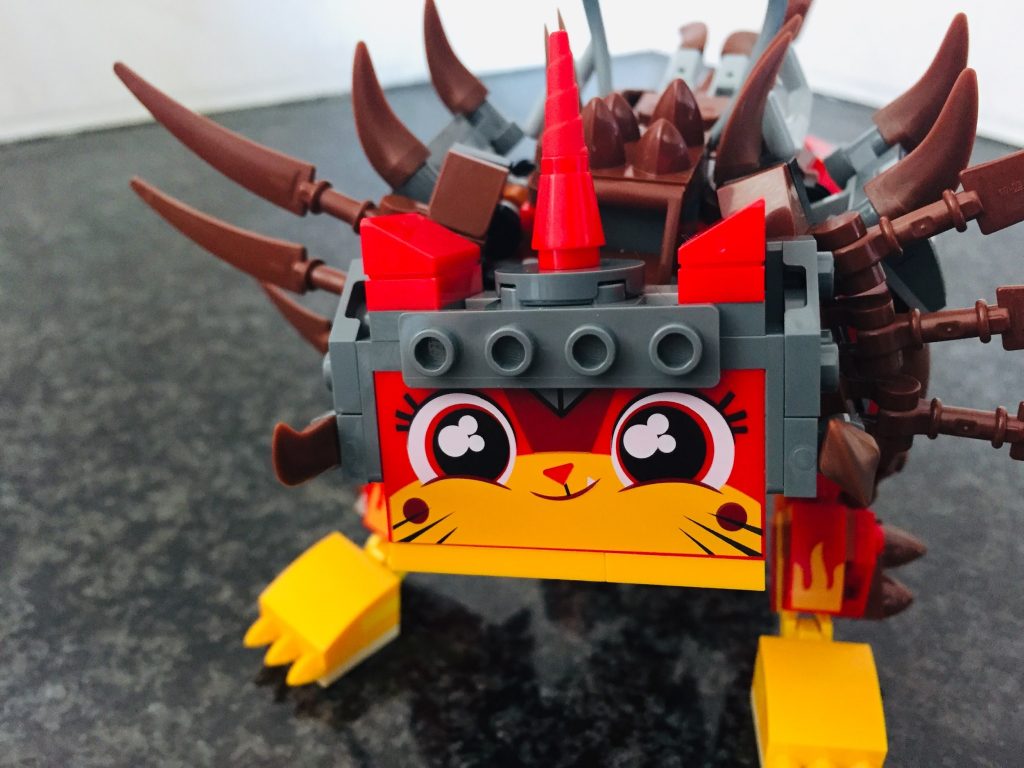
The main build, being Ultrakatty, is fairly straightforward, but with some nice ideas for building body structures along with the horns and armour. The legs are on ball joints on the shoulders and hips, with hinge pieces at the knees and ankles (those are printed fire on the pieces above the paws). This gives the giant cat some good poses alongside the four ball joints on the tail and one used for the neck. There is even a hinge based join on what is probably the lower abdomen just above the hip which gives a nice articulation point along the back to raise the tail higher.
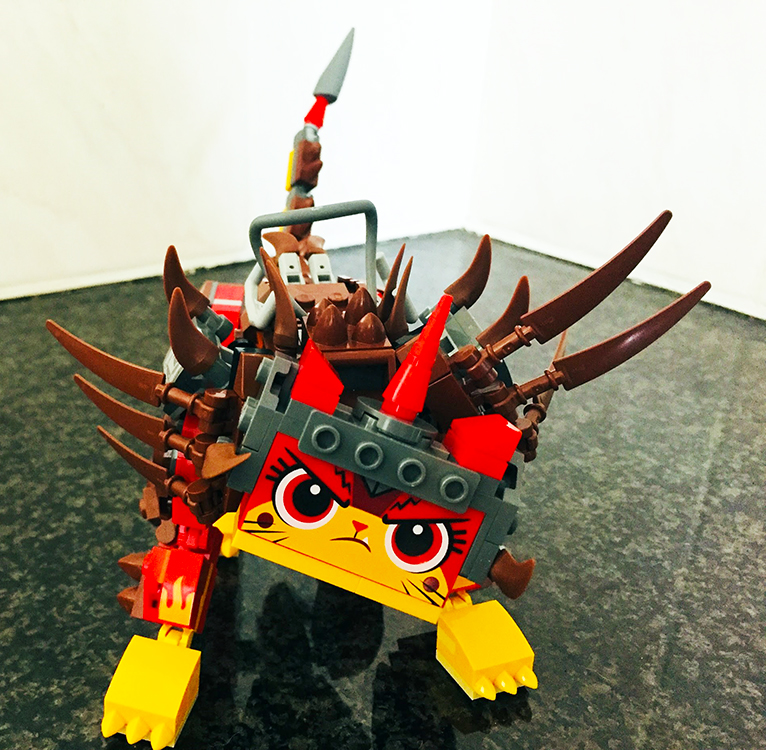
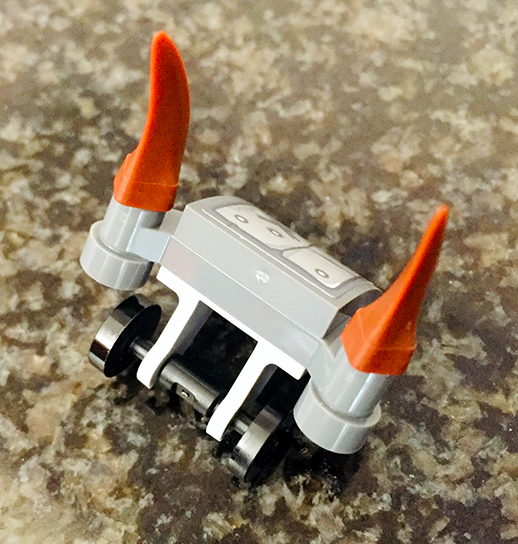
The legs, body and head are littered with spiky detail, probably bordering on too much though depending on your personal taste. The three larger spikes on either side of the head are on ball joints with the head, and each are clipped, give a good range of movement to what can only be described as the ‘mane’. My favorite part though has to be the shoulder padding armour, which is attached via a clip and small skateboard wheels and hangs over the top of the front legs. The wheel being clipped gives minimal friction and moves up and down seamlessly with the shoulder on the ball joint and I have yet get it caught. A few stickers give the detail on the armour plating on the sides of the body and shoulders.
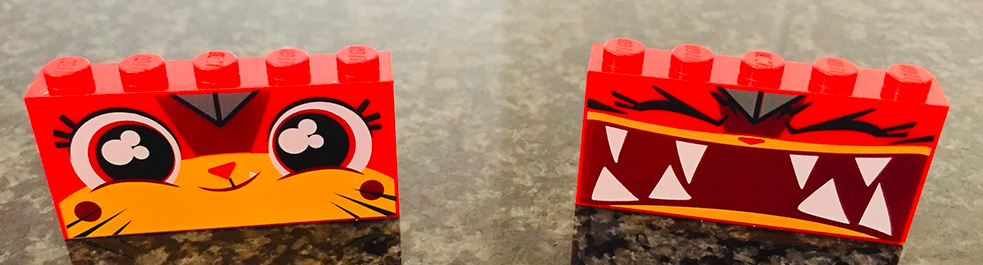
Ultrakatty also gets three different facial expressions (all printed on a 1×5 brick which is two bricks in height), which get a lovely variety of expressions to please everyone and help with playability. My preference is to still keep the friendly face going as the norm. The build also allows for a relatively easy replacement of the face when wanted, and is still quite sturdy when built.
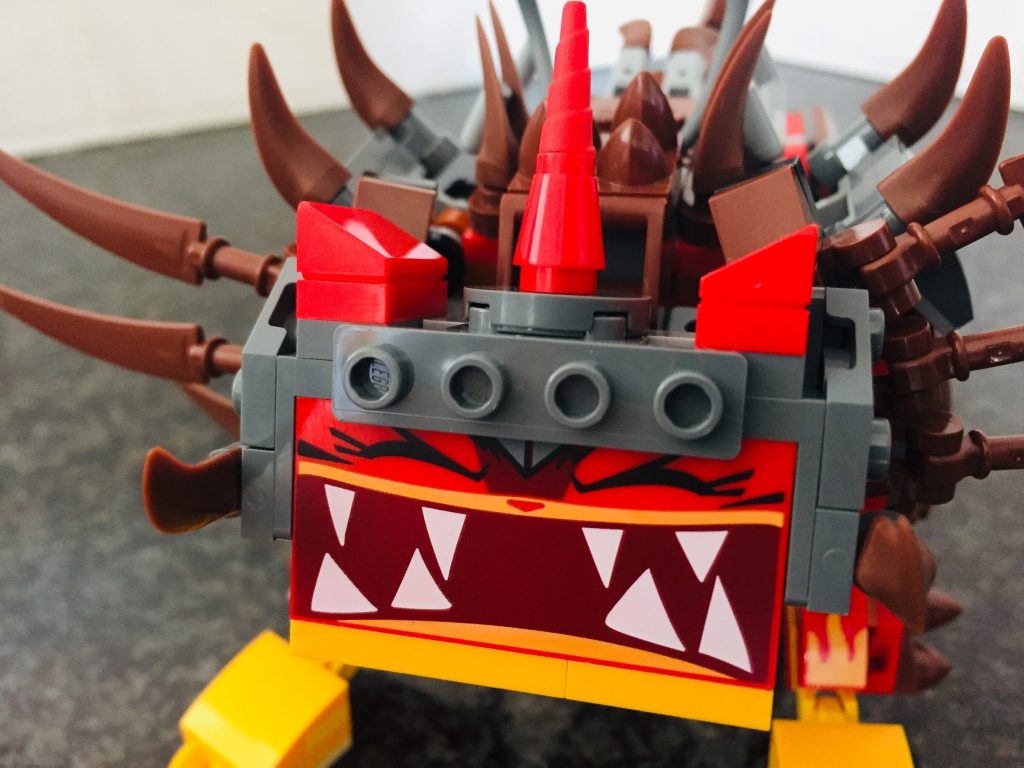
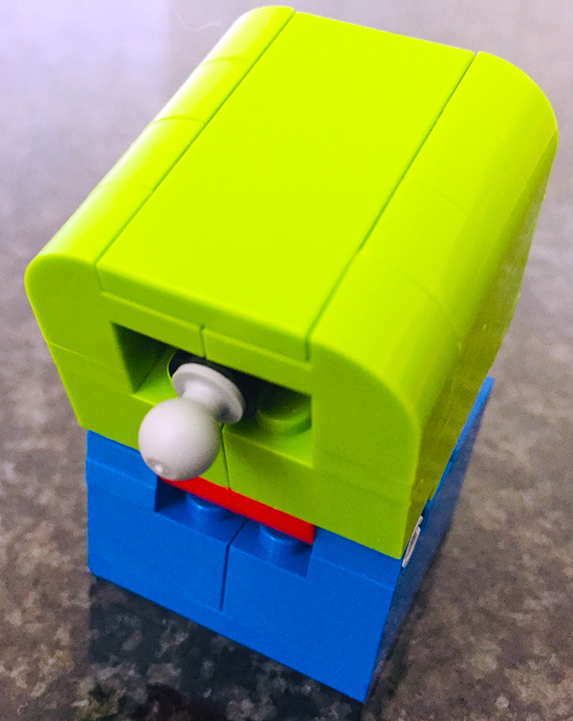
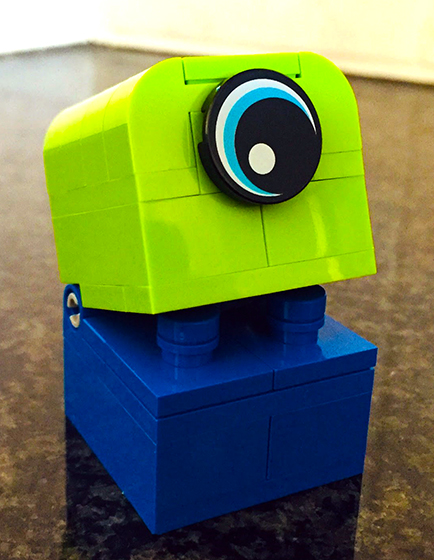
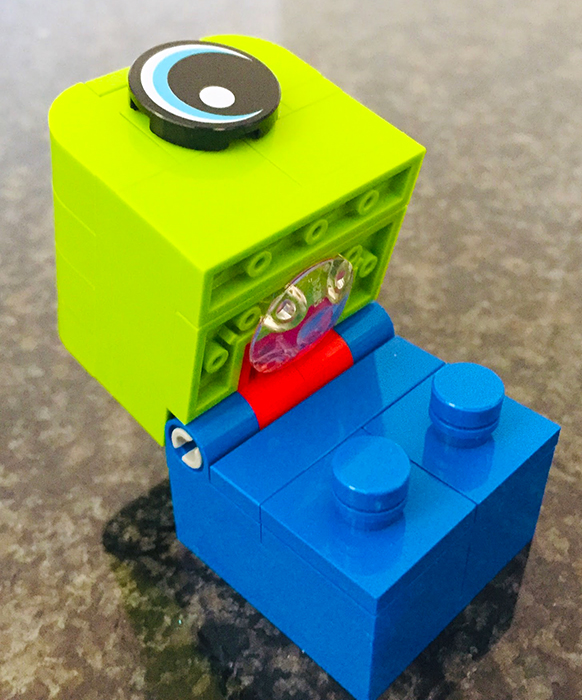
Within the set is also a brick-built Duplo® figure which we saw at the end of the first LEGO® movie, placed in to be the antagonist of the scene. It has a quaint build, with good bright colours which contrast nicely to the generally earthy colours used on Ultrakatty. The mouth can’t fully close, but can open nice and wide. The build has the ability to turn the eye from a ball joint behind the head.
The Minifigures:

The set come with two minifigures, being Emmet and Lucy. The latter being geared up for battle as the set name suggests, along with set of goggles, scarf, quiver, a cross bow and beautifully printed shield made from a stop sign. Emmet is a very similar figure to those from the original movie sets, although his printing is scuffed and faded given the apocalypse and all. He gets two facial expressions also set to the scene. The expression showing the terror and panic is a firm favourite of mine.


Warrior Lucy also gets some similar styled clothes compared to the first film, although the printing for her torso is new as well, and arm printing (both arms), and a new leg print representing leather and padding. I am not sold on the tan printing to outline her hips though. The great updated mould for her hair now comes with goggles set above her colored highlights. She also comes with two scene setting expressions.


Playability:

The set works well together and does enough to set a scene and the Minifigures included are the main stars of the franchise, although an additional antagonistic Duplo® villain would’ve been great. Ultrakatty is just ideal for what it needs to be and can be moved around easily with very few parts becoming detached. Although I noted that the spikes became an annoyance when setting up poses (results will vary based on your patience here). Another good feature is that this set can be combined with set 70829 (Emmet and Lucy’s Escape Buggy) to create something new and take the play further.

The verdict:

Overall, I liked building the set, and I enjoy the set for what it is. I feel that the spikes may just be overdone as it is annoying to get poses right without knocking them out of place, but think that it is also perfect for setting the scene and will depend on one’s own preferences. The prints are great in the set and getting a larger version of Unikitty as “Ultrakatty” makes it special amongst the other sets coming. I will be looking forward to the other sets if this is the standard.

10264 – Creator Expert Corner Garage

Reviewed by Thys Brits (SAFOLs Member, jhbLUG Member)

So, the 1st of January arrived, after much anticipation from the AFOL community, bringing the release of the Corner Garage, set 10264 as the annual modular Creator Expert set, for 2019.

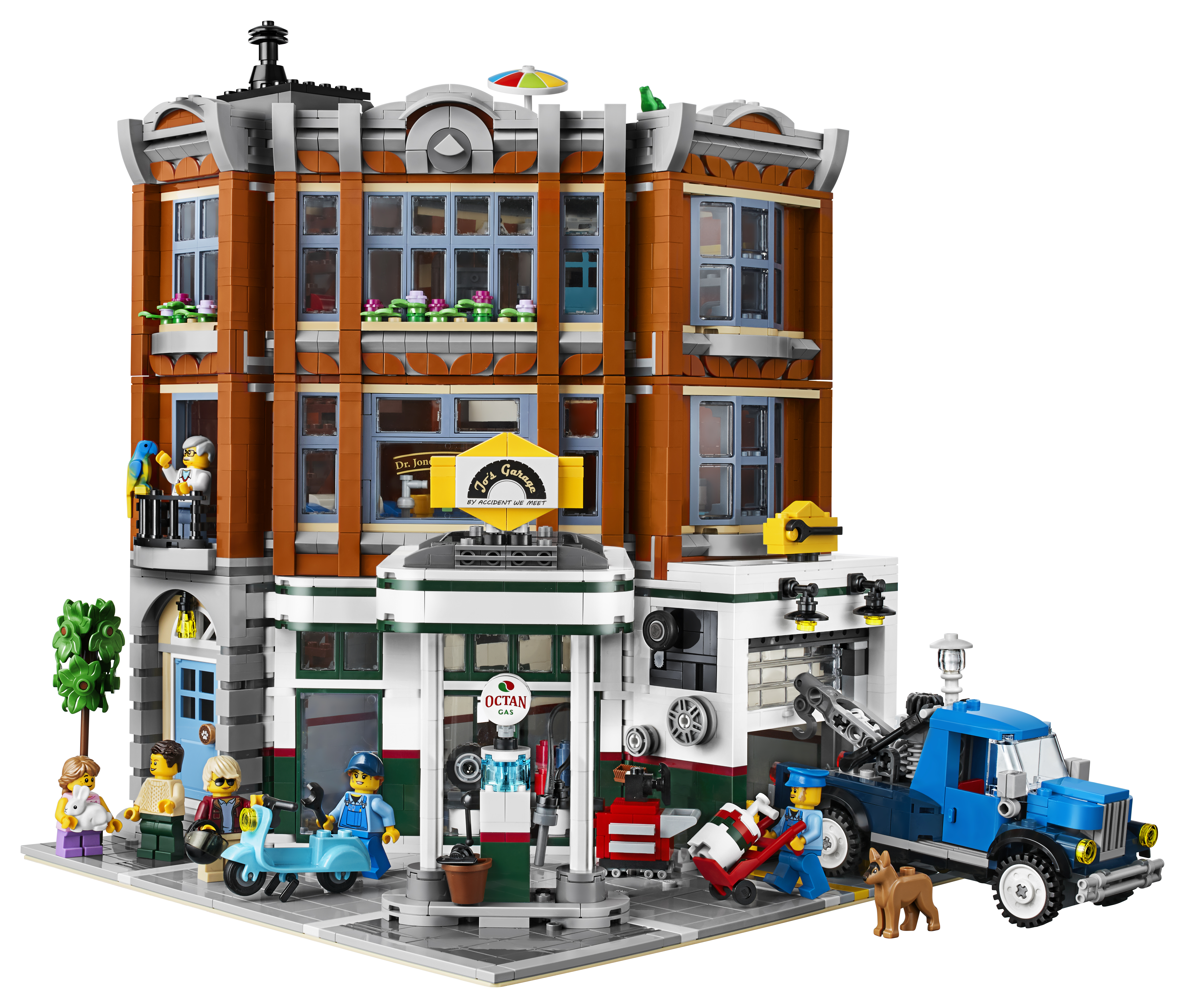
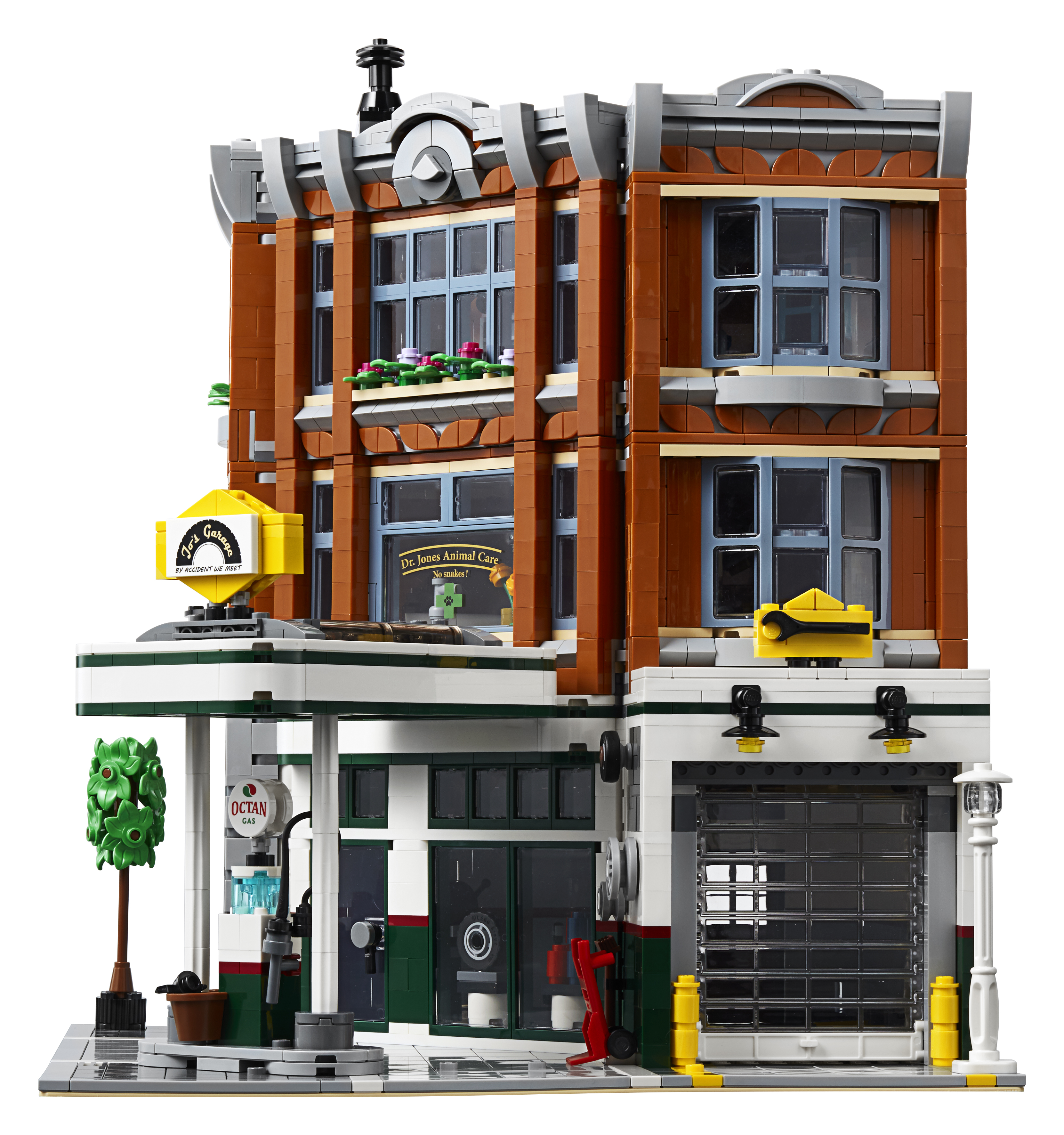
The announcement of the set on 3 December came with the usual amount of feedback from the LEGO® community, a lot of it negative, similar to that for the previous modular, the Downtown Diner, set 10260. I was also not really convinced about the set, but recently have discovered that LEGO® often surprises me from what you see on the box, compared to what is inside. In short, I think the Corner Garage is a great set, very much different from most of the previous modular sets, and I’ll explain why I think so.

Firstly the basics, as is tradition with a product review such as this. The box is the standard size as the previous modular buildings. Some people have suggested that LEGO® are cutting down on box sizes, taking the environment into consideration, which can be seen in many of the new sets also released on 1 January. This is not the case with this set though. Opening the box reveals six sets of numbered bags for the 2568 pieces, with the sand baseplate and two loose grey plates. These are used along with bag set 4 for the first floor of the building, which is odd, since bag set 5 also contains these same plates to be used as the second floor of the building.

Bag sets:

  • 1 and 2 are used for the ground floor
  • 3 for the courtyard cover and the tow truck
  • 4 for the first floor
  • 5 for the second floor
  • 6 for the roof.

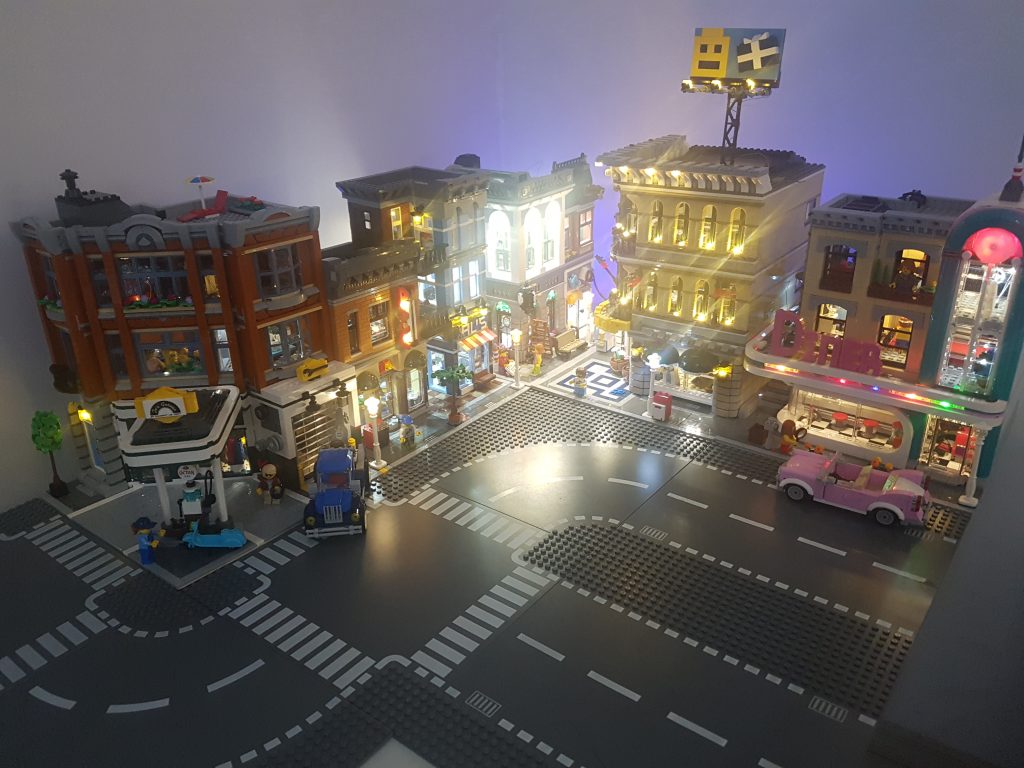
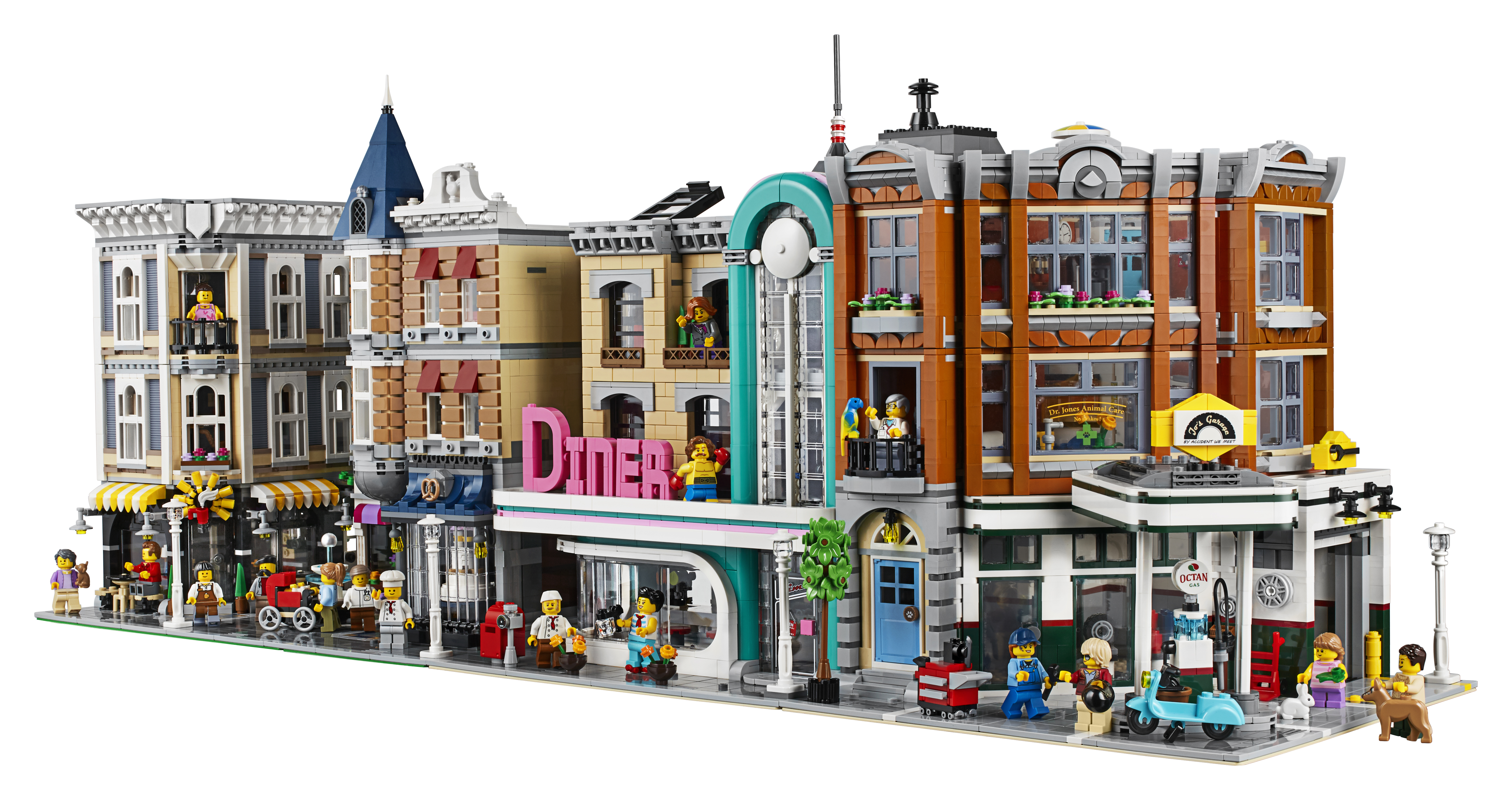
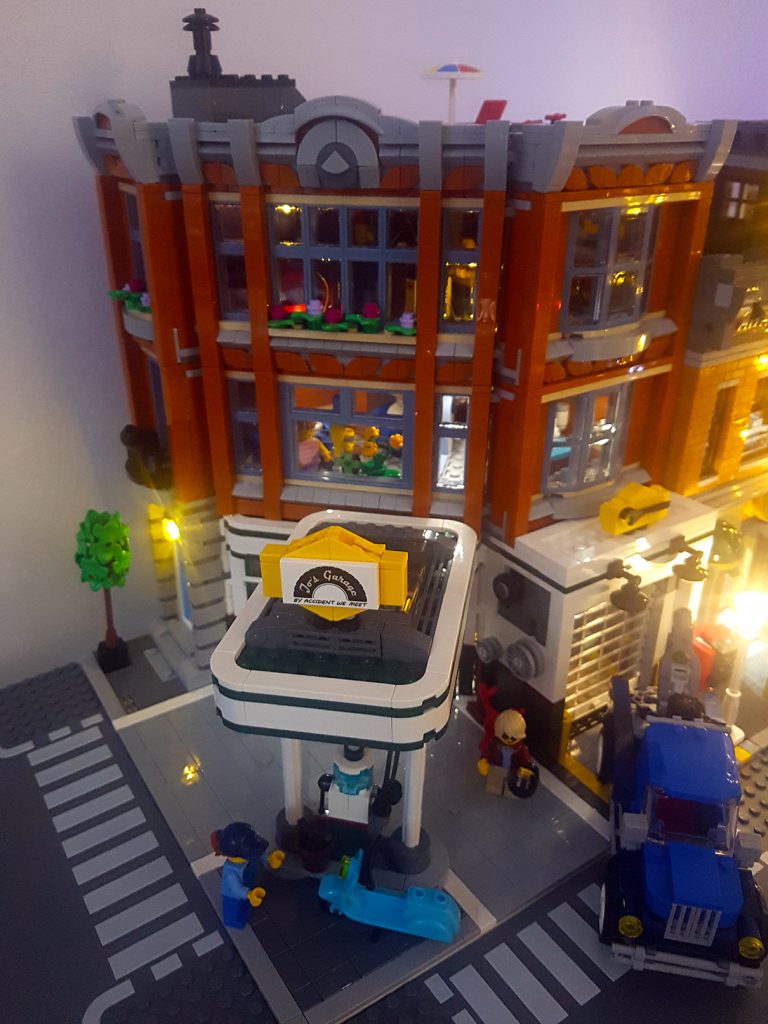
The build took me about five to six hours altogether. Detailed images can be seen at the the bottom of this review from the Official LEGO® press release. However I put together a little display of the set with a few other sets, particularly the two modulars now retired, the Brick Bank and Detective’s Office.

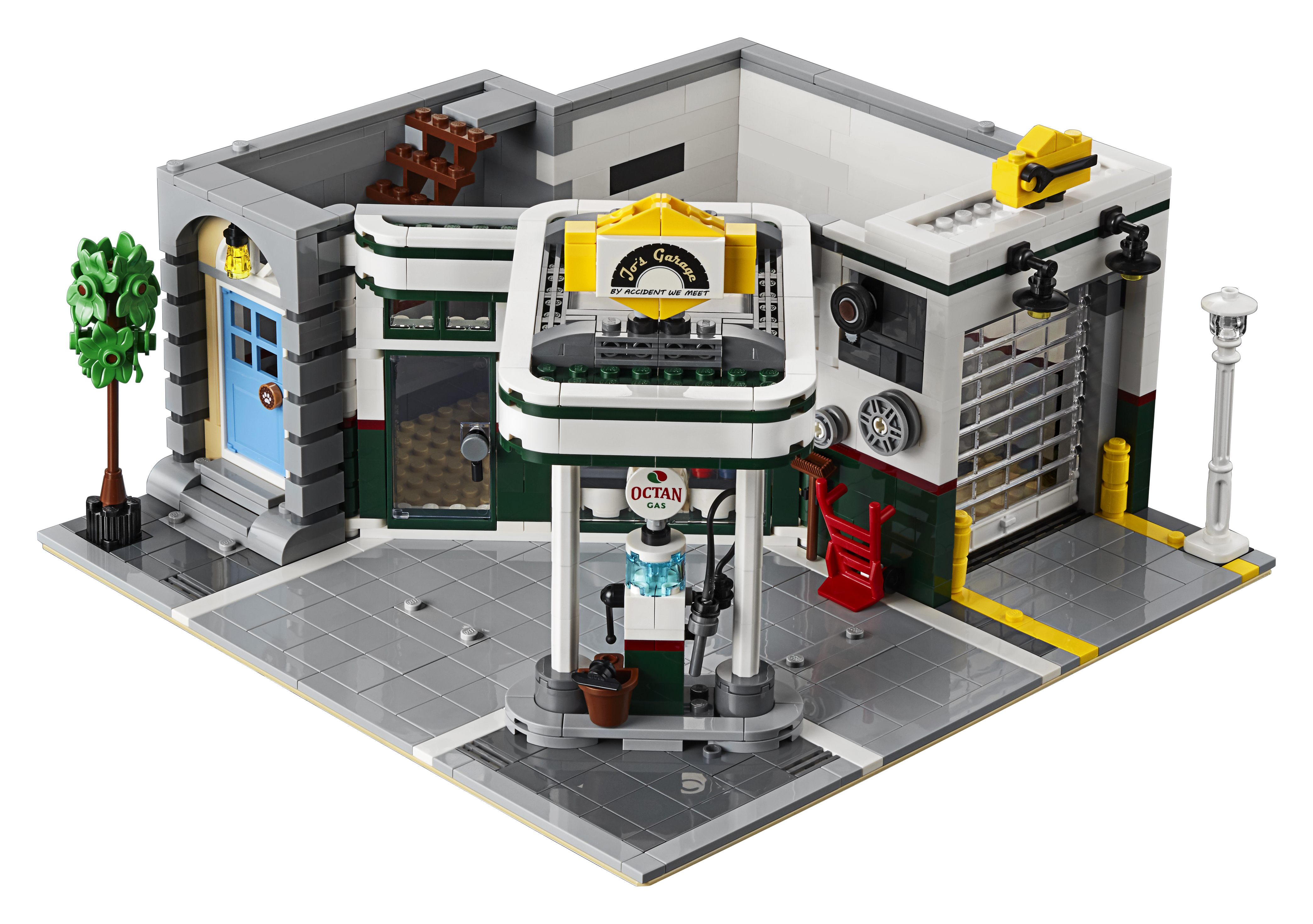
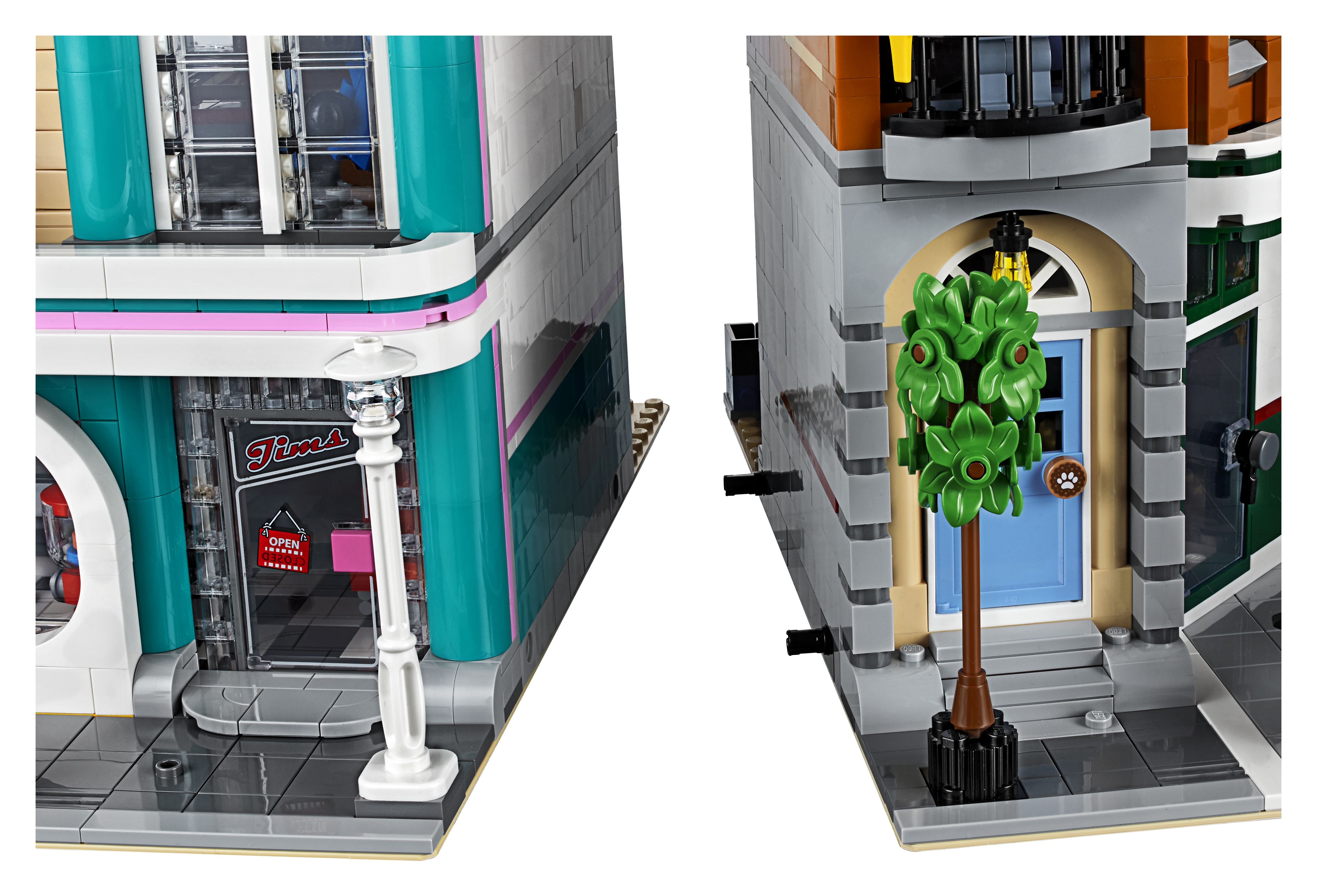
First off, the ground floor, which houses the actual garage. There is a lot of tiling to be done in this section, as about half the baseplate is covered with tiles for the filling station drive-through / courtyard. The interior of the garage is very simplistic, housing a manual lift module, which can be operated with a sliding mechanism from the back of the building, which is rather well thought out and one of many nifty design features in the set.
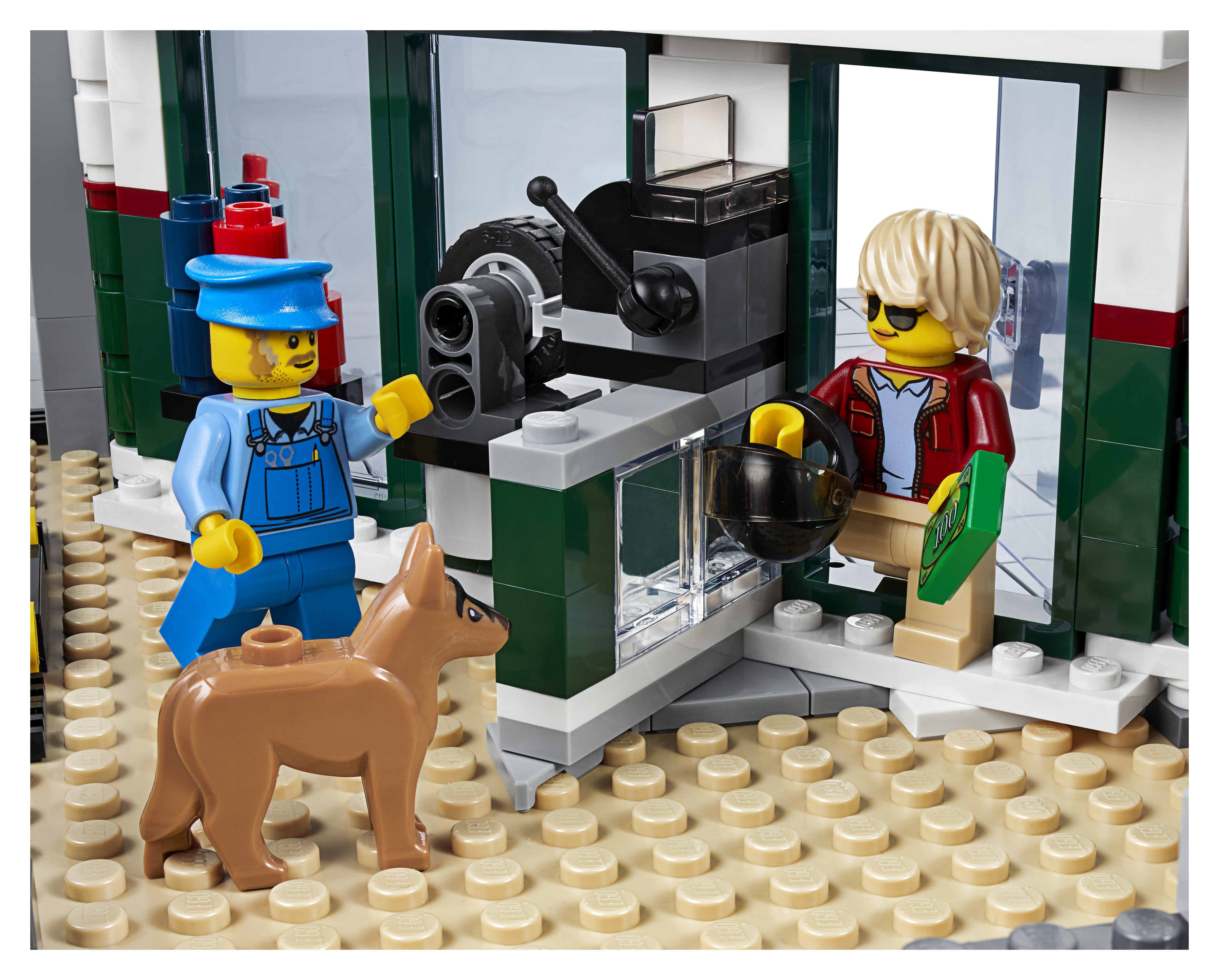
The other interesting design feature is that of the garage door, which doesn’t use the standard sliding-into-the-roof of previous sets with garage doors, but rather a roll-up mechanism. This leaves a lot more open space when opening up the set to play with it. The garage also has a toolbox on wheels, a wheel-alignment station and a cashier’s desk with cash register. Clever placement of 2×1 bricks with a technic pin extension on the exterior wall houses the display of spare wheel rims. All these features make me feel that the set actually got the wrong name, as this is, in fact, a tyre shop, not a garage.

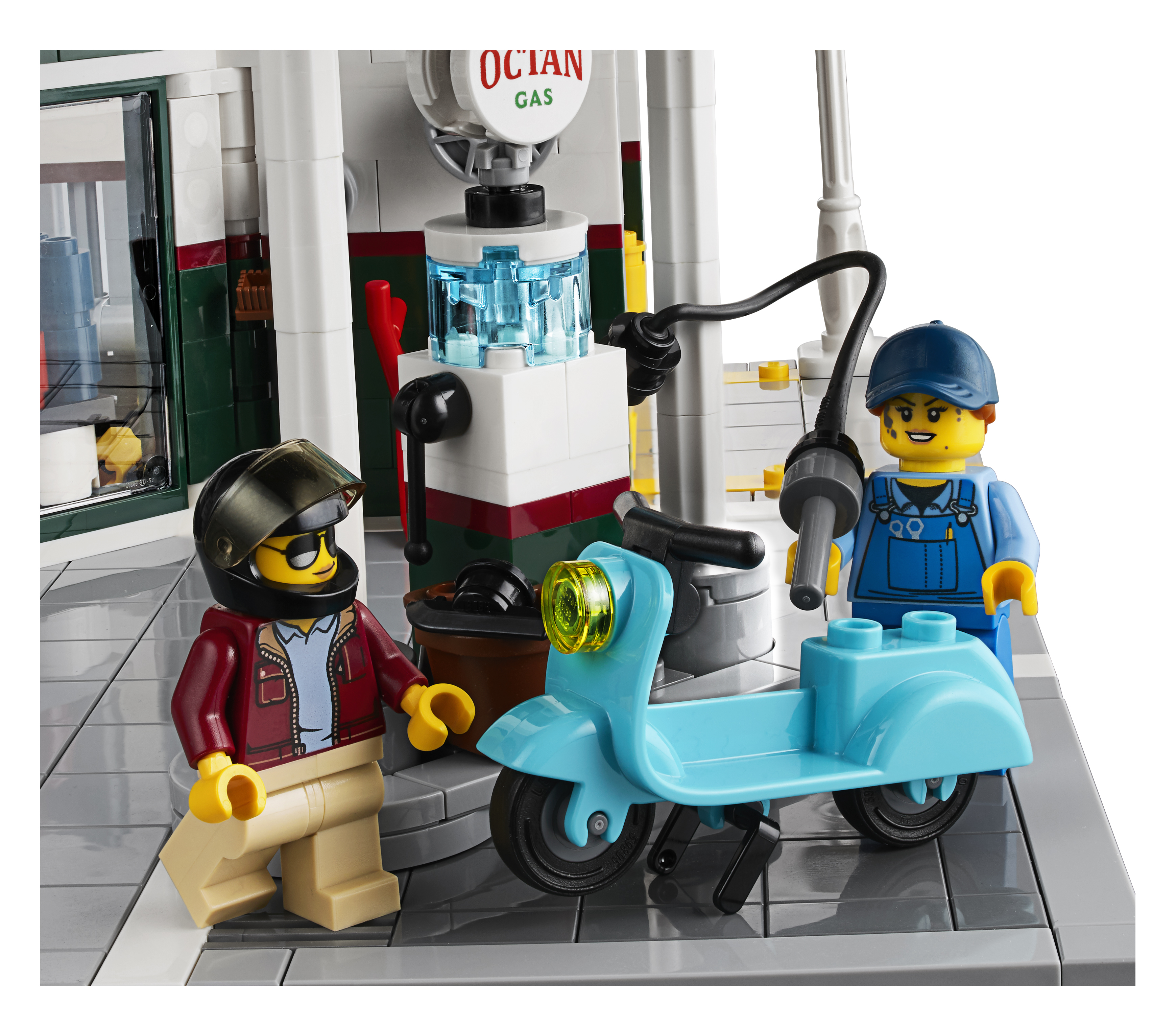
The courtyard section is also very cleverly put together. To my mind, this was what LEGO® was trying to achieve with the set – showing us how to build at angles. Most LEGO® sets are built square, but this set has several examples of how to build across the normal straight lines. The petrol pump section is one, whilst the front of the building is the other.

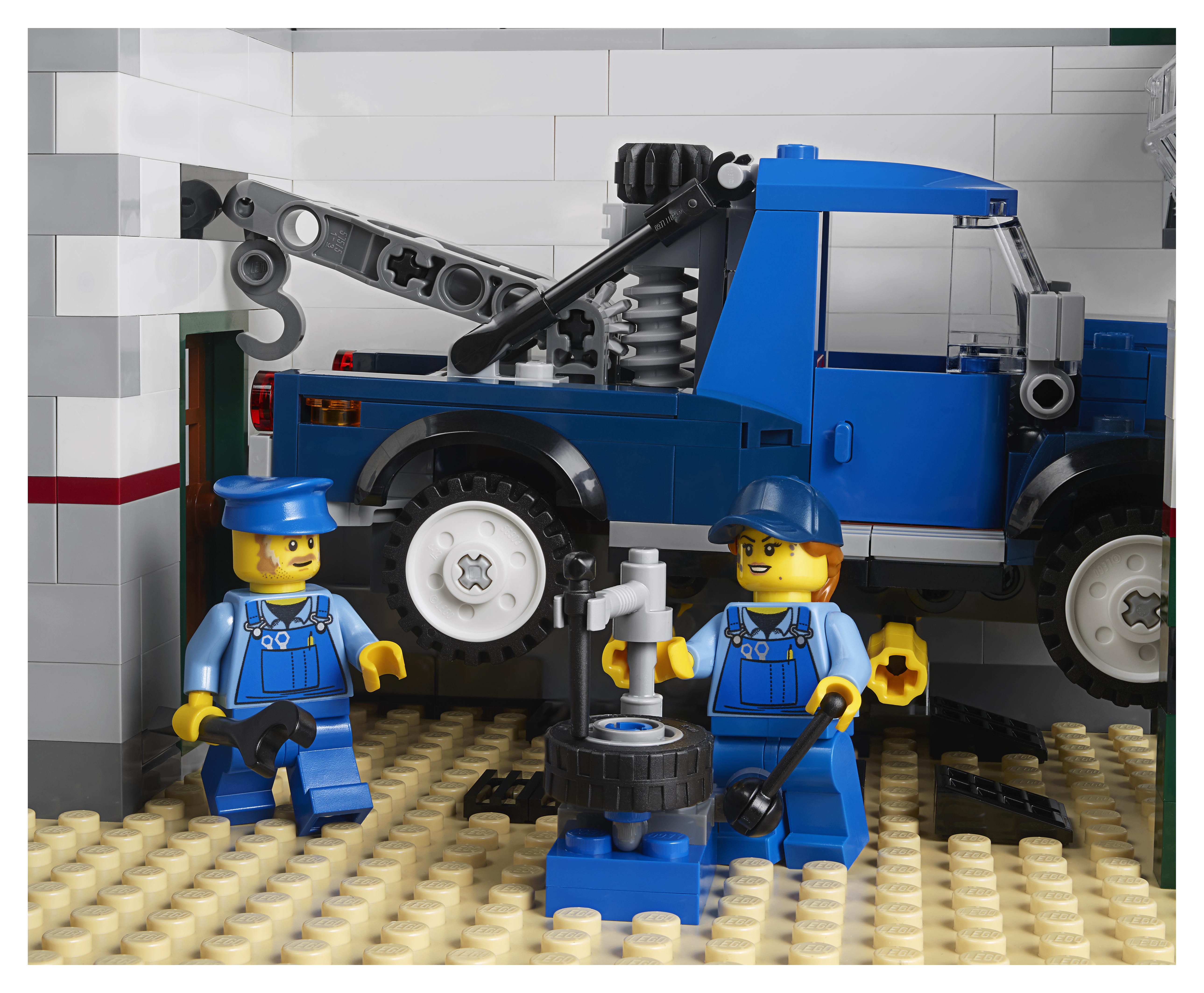
After the ground floor is the tow-truck. Another part of the build that I feel sets elements of the Corner Garage apart for me from other LEGO® sets. Compared to cars in City sets, it is a truly Creator Expert build, very rounded off and also featuring some features from older sets, such as the front fender, which is similar to that of the fire engine from the old Fire House modular set’s fire truck. The towing mechanism is also detailed and not just a simple up-and-down swivel. In short, it adds to the set’s appeal, instead of detracting from it.

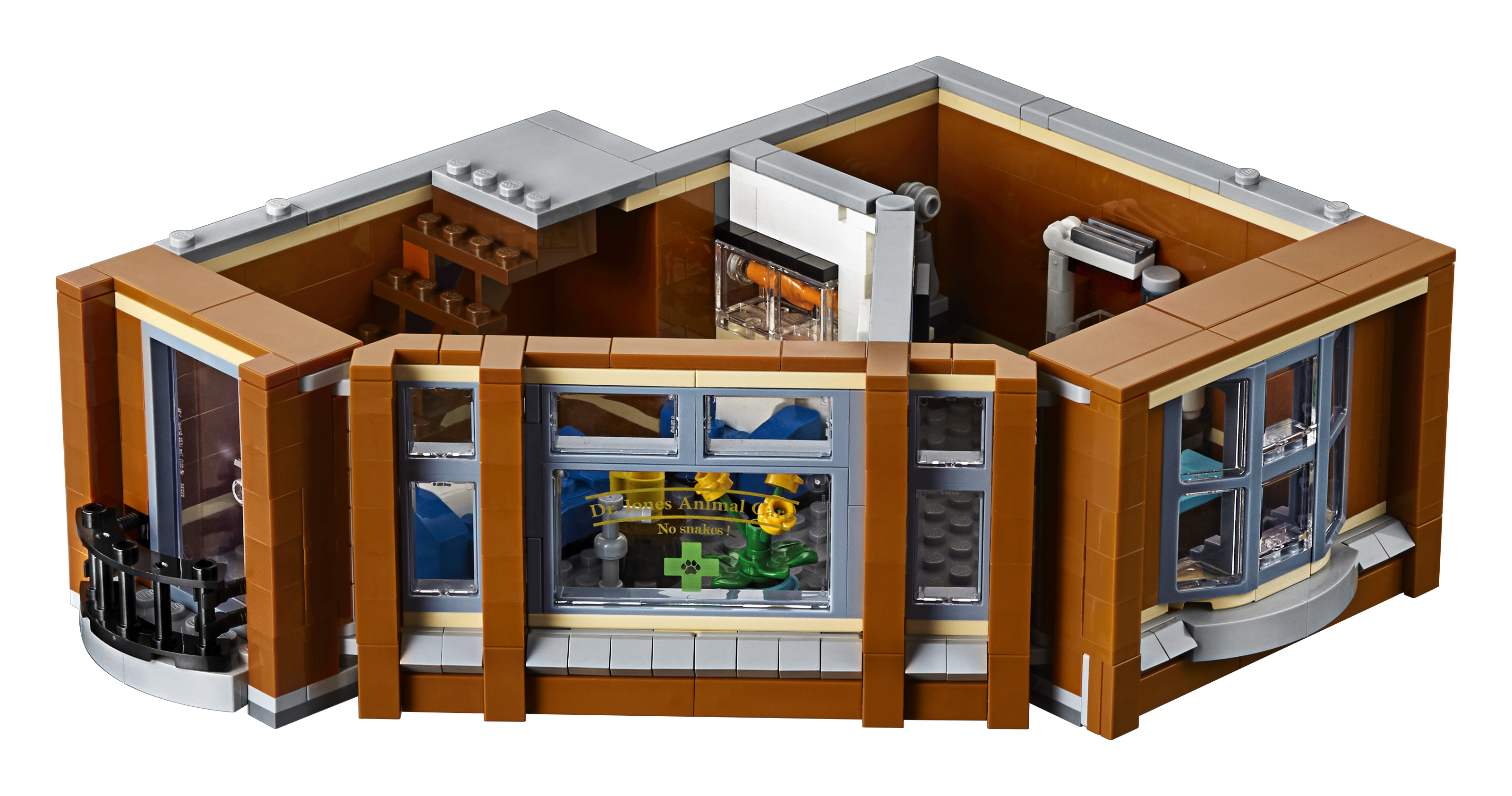
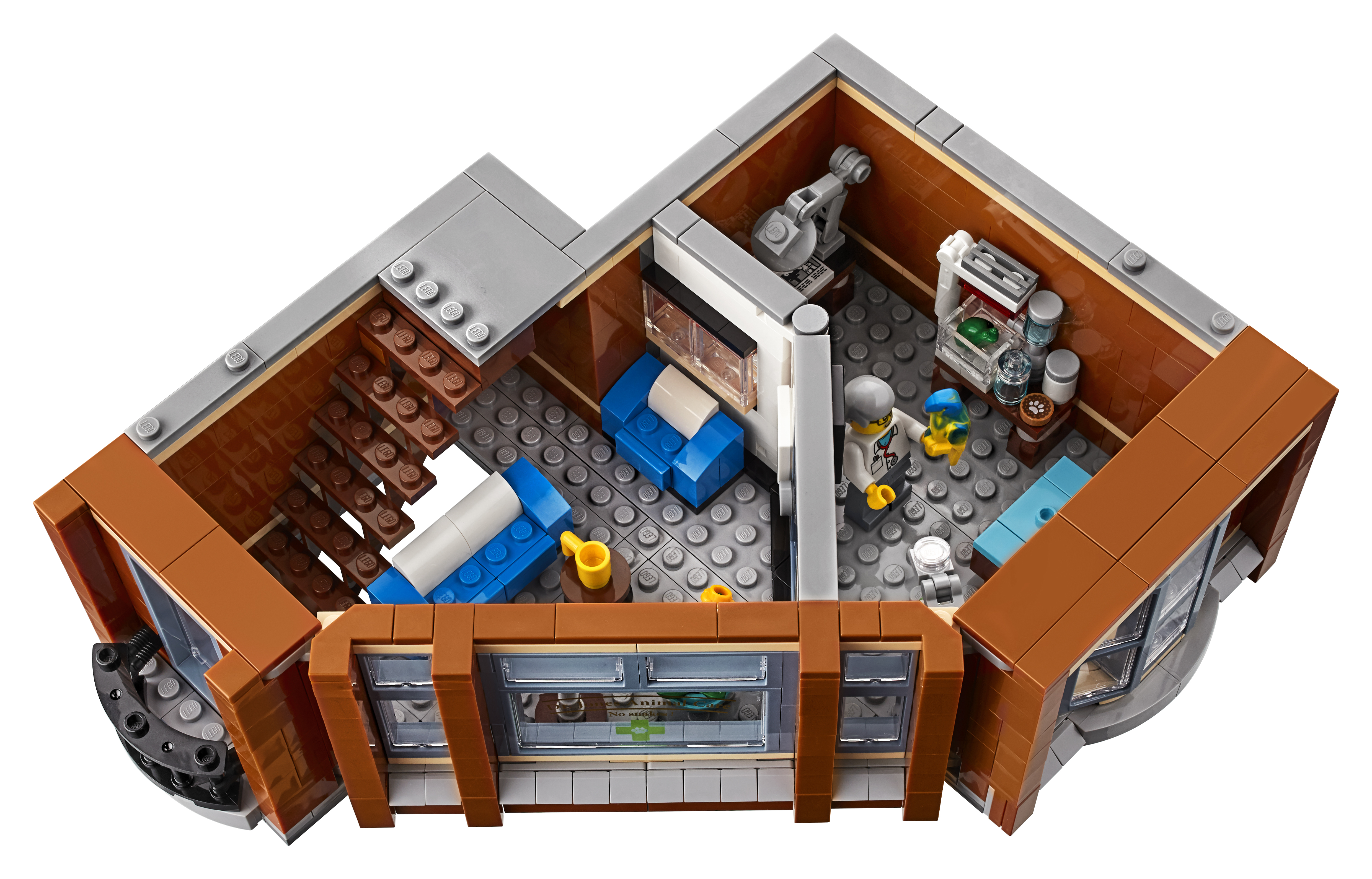
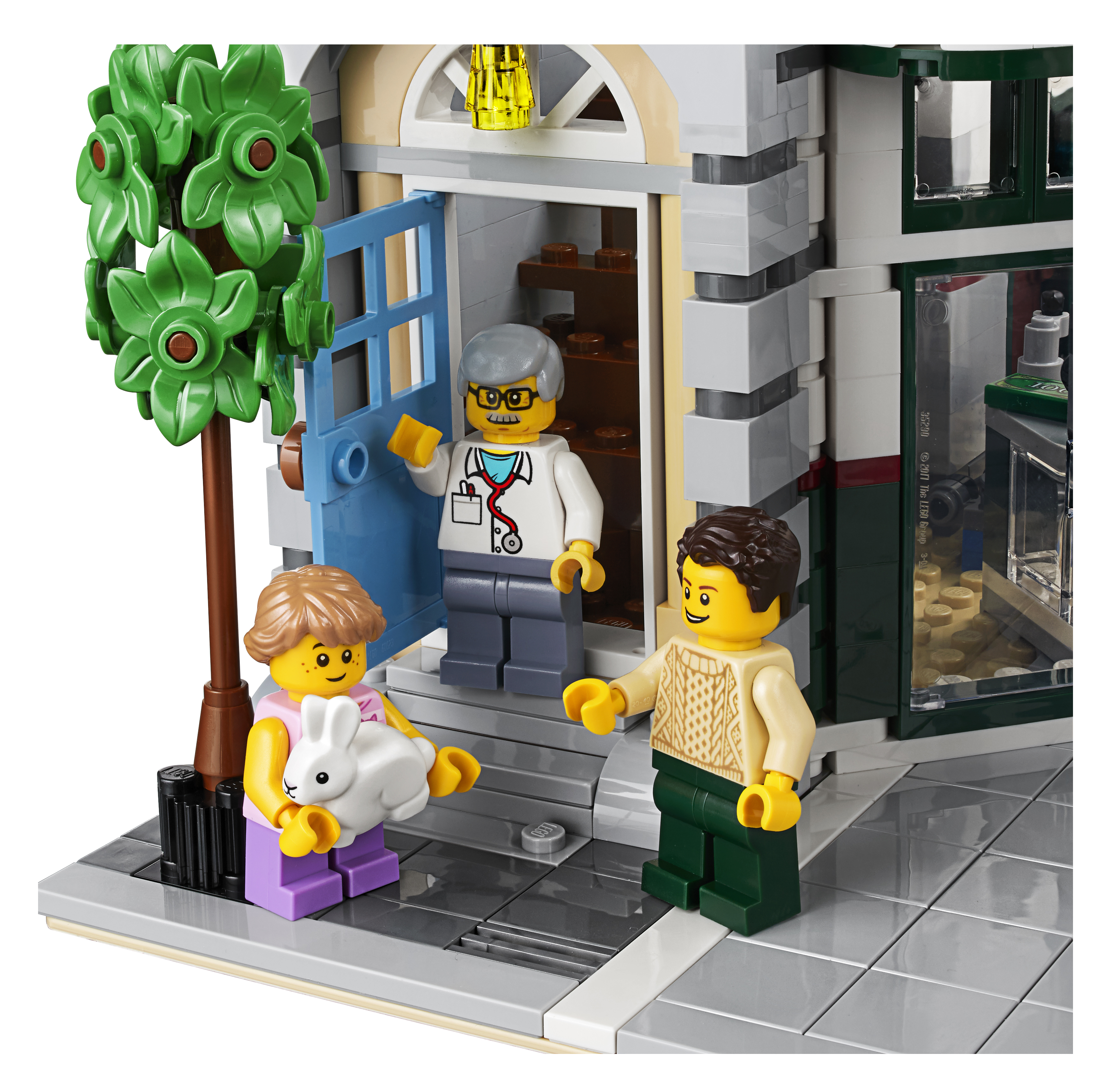
The first floor of the building houses a vet’s office. This is where most people found the set odd, since very few places in real life would one find a vet’s office on a first floor of a building, as well as finding much above a garage. However, I don’t mind it at all, seeing as LEGO® is supposed to be built using imagination and children’s make-believe.

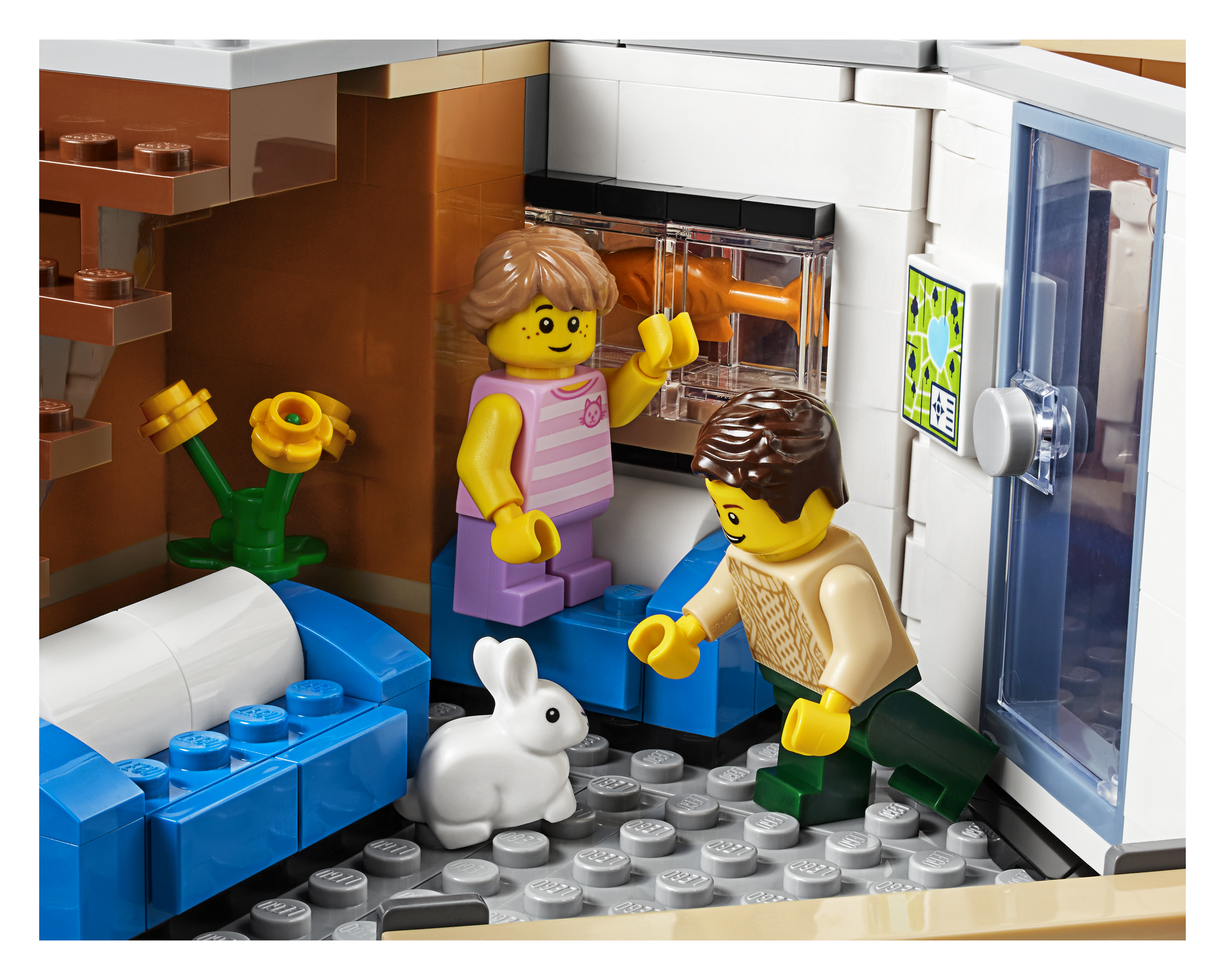
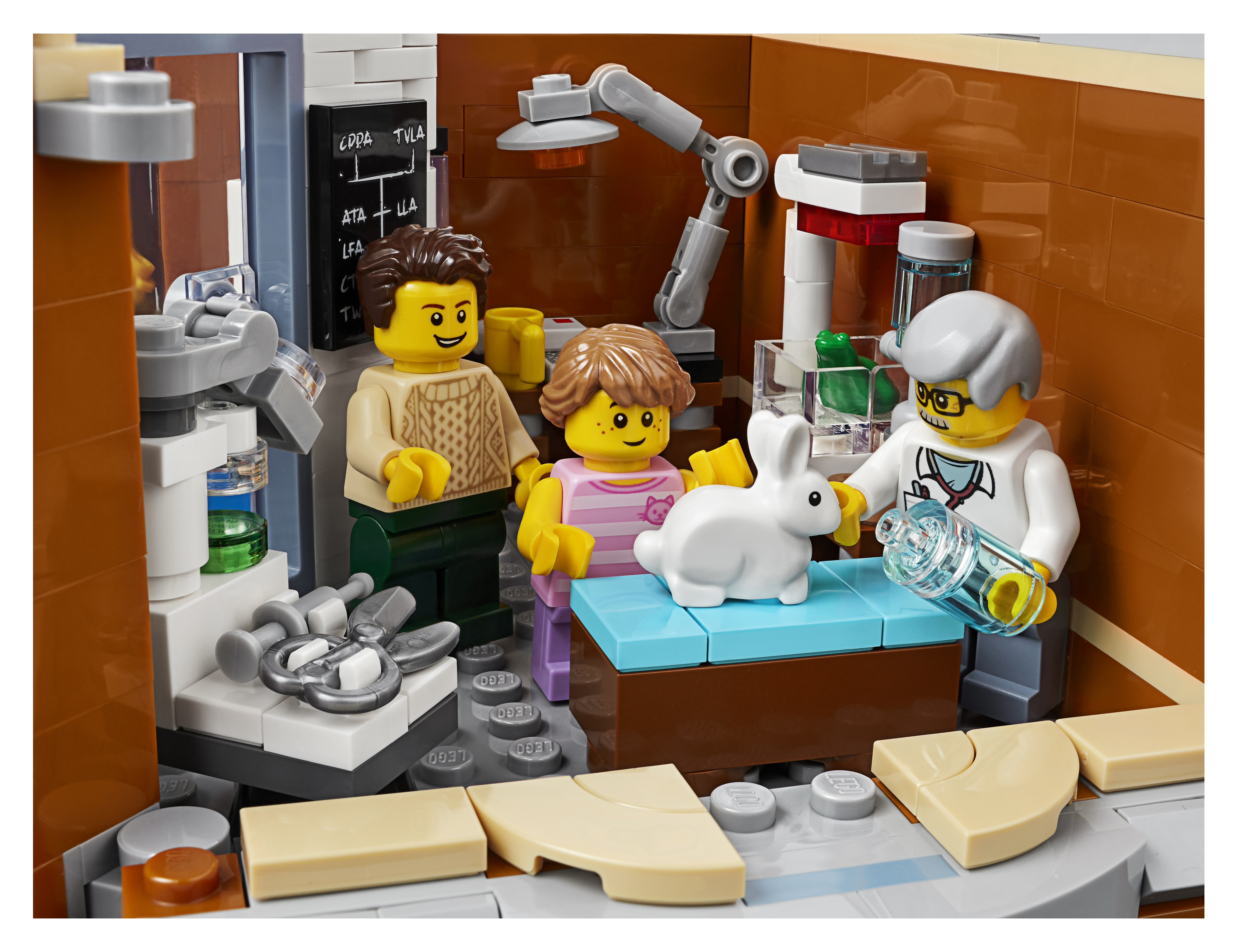
The floor is divided into two sections. Firstly, the vet’s treatment room, featuring a fish tank, a desk with a built desk lamp, what looks like an incubation station, hosting a frog in the incubator, along with some bottles and a printed dog biscuit 1×1 round tile, a treatment table with a bunny and a research station with a built microscope. Second is the reception area, featuring a small balcony, two couches, a coffee table, pot plant and stand with a parrot on it. This is one section that I feel could have had more in it. The couches are put together very simply, however, this may also be a way for LEGO® to show how very simple techniques still work for complicated displays. The two sections are also another example of angled building, with the wall between then running diagonally across the floor. The windows of both the first and second floor also feature some SNOT (Studs Not On Top) techniques.

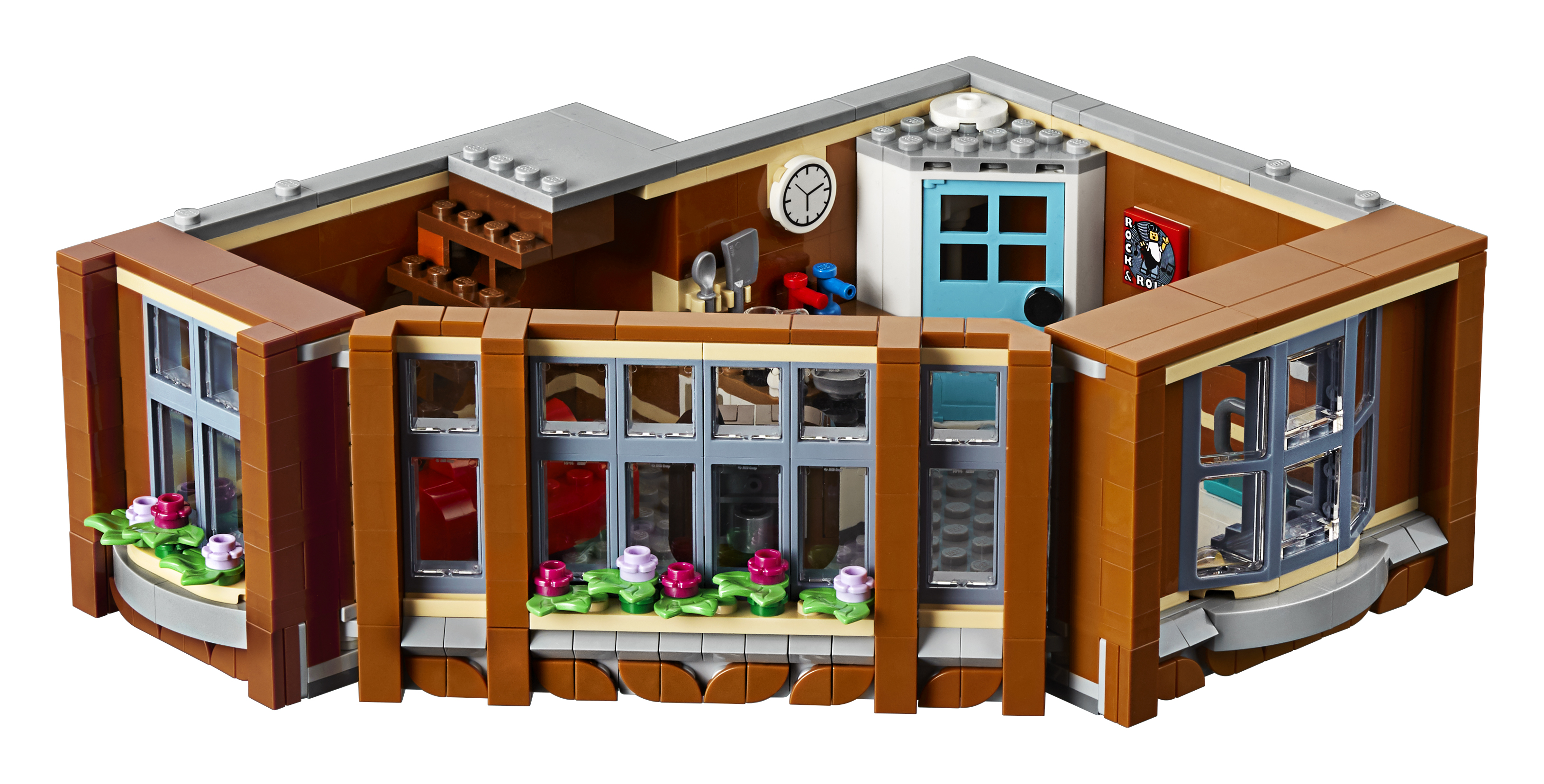
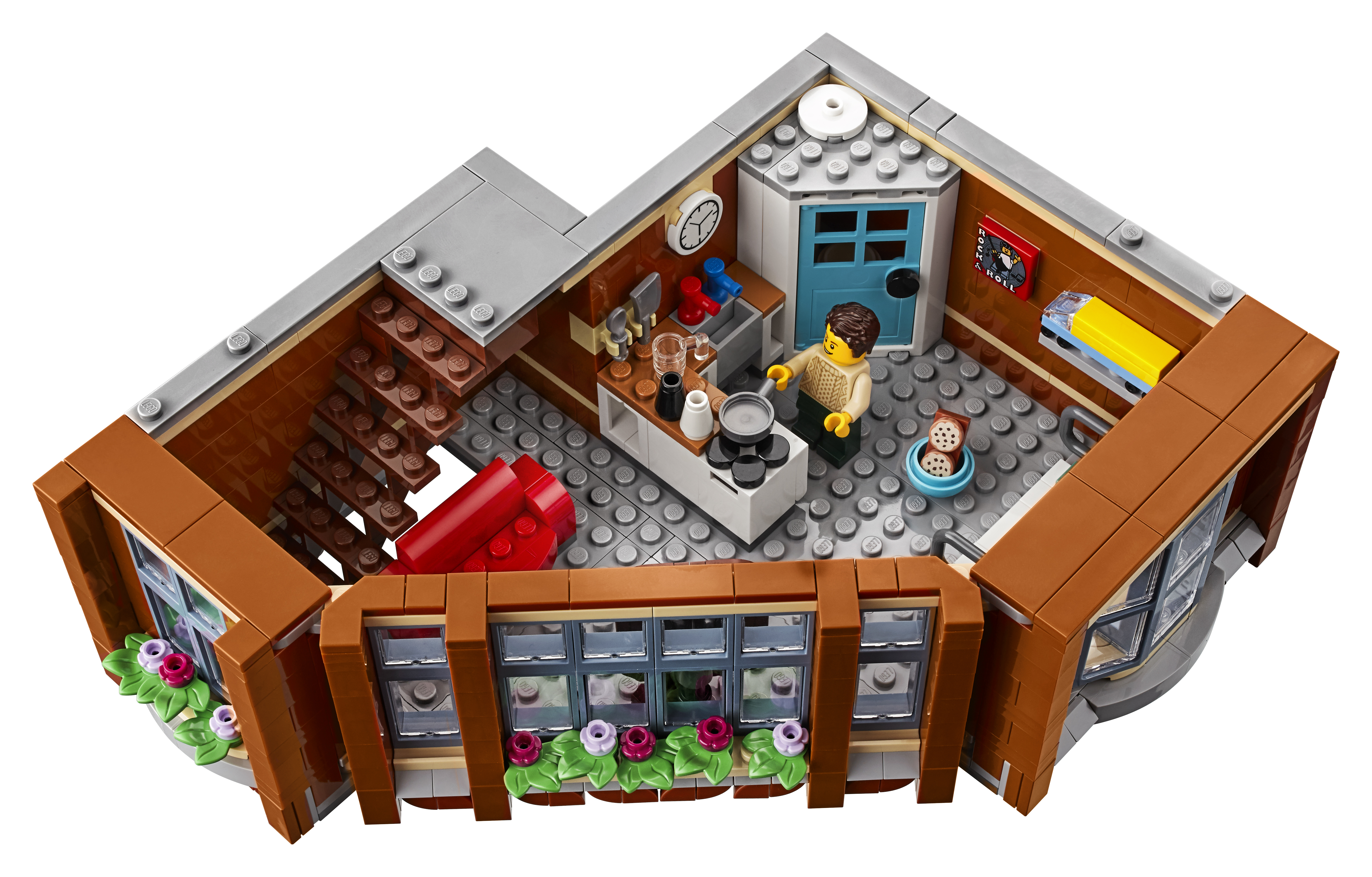
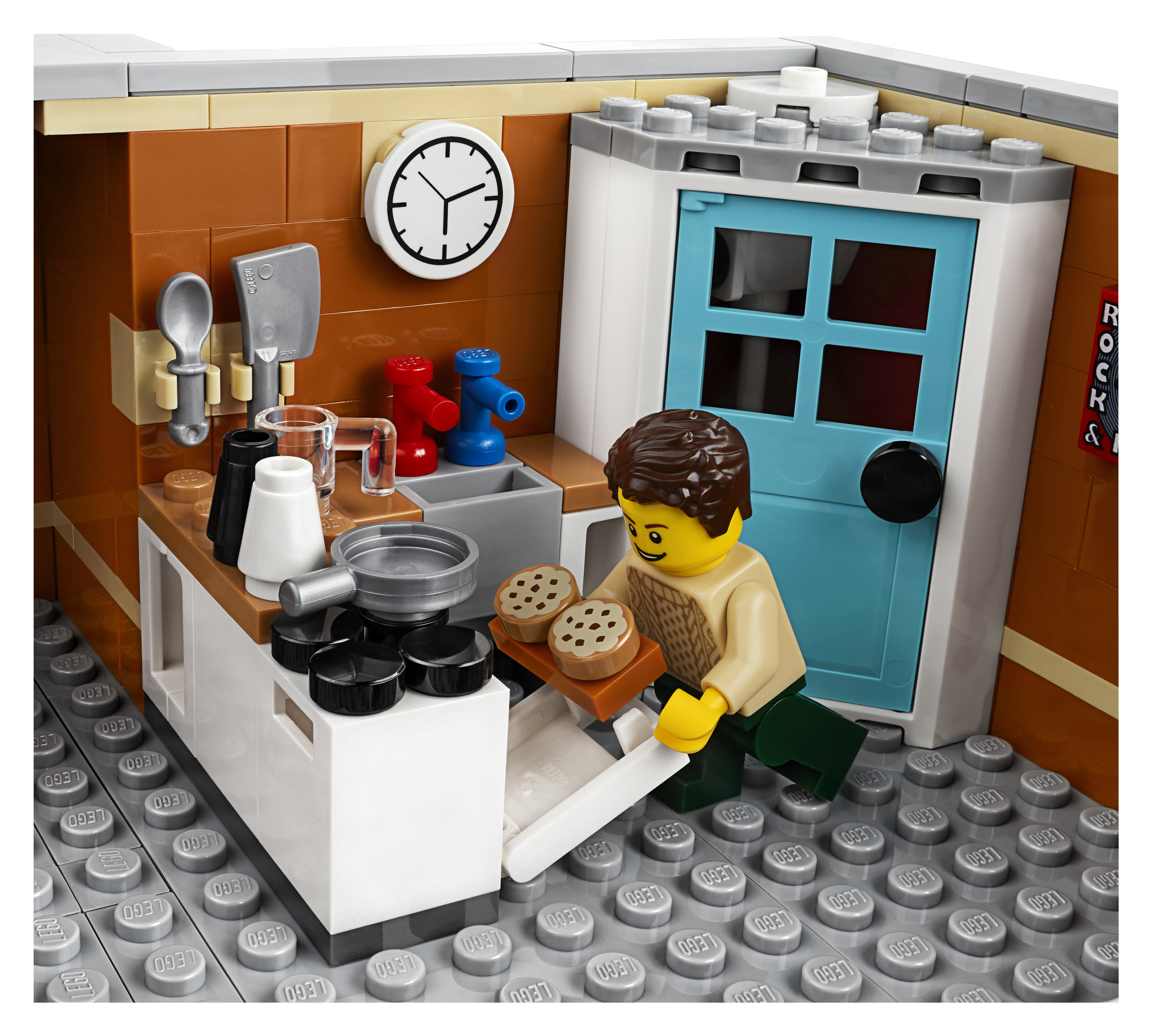
The second floor is a very simplistic lodging of what appears to be a young man, as it features a small micro-build truck on the one wall, a rock-and-roll poster and nothing much else, apart from the couch, TV and bunk-style bed. The kitchen build is quite detailed and the room also has a corner-toilet. The TV set also shows some clever techniques. Again, I suppose this floor could have been something completely different and much more detailed, as many people have hinted at. However, I still enjoyed putting it all together.
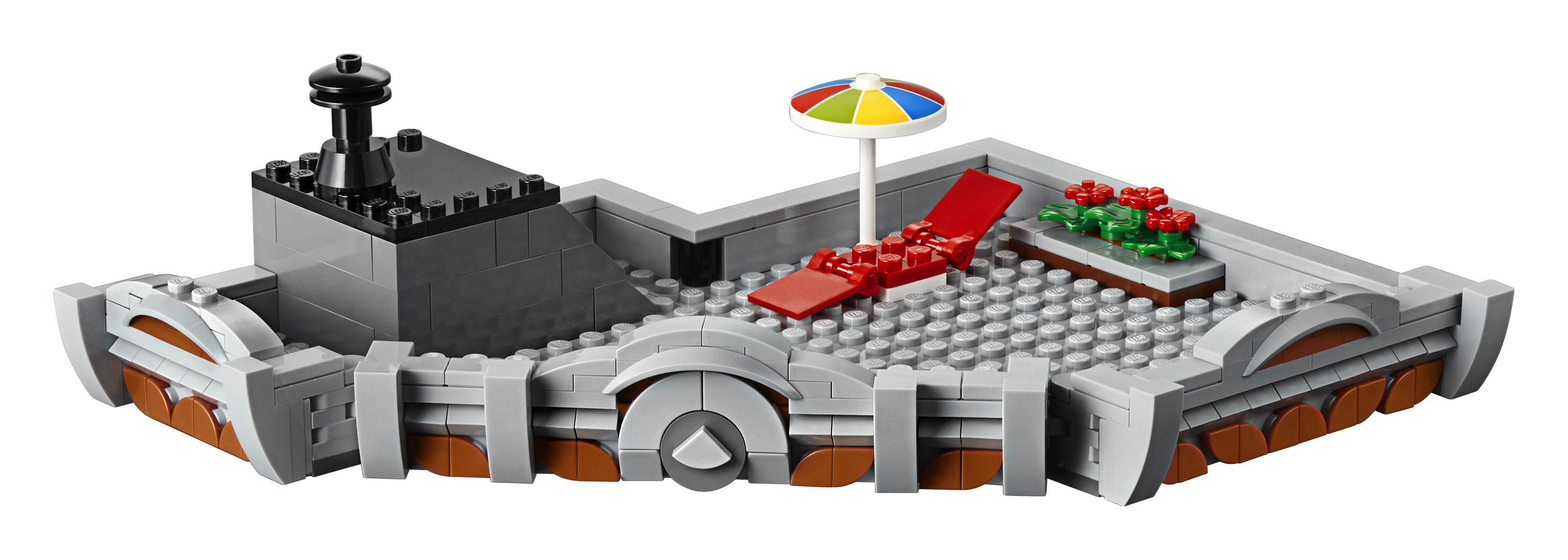
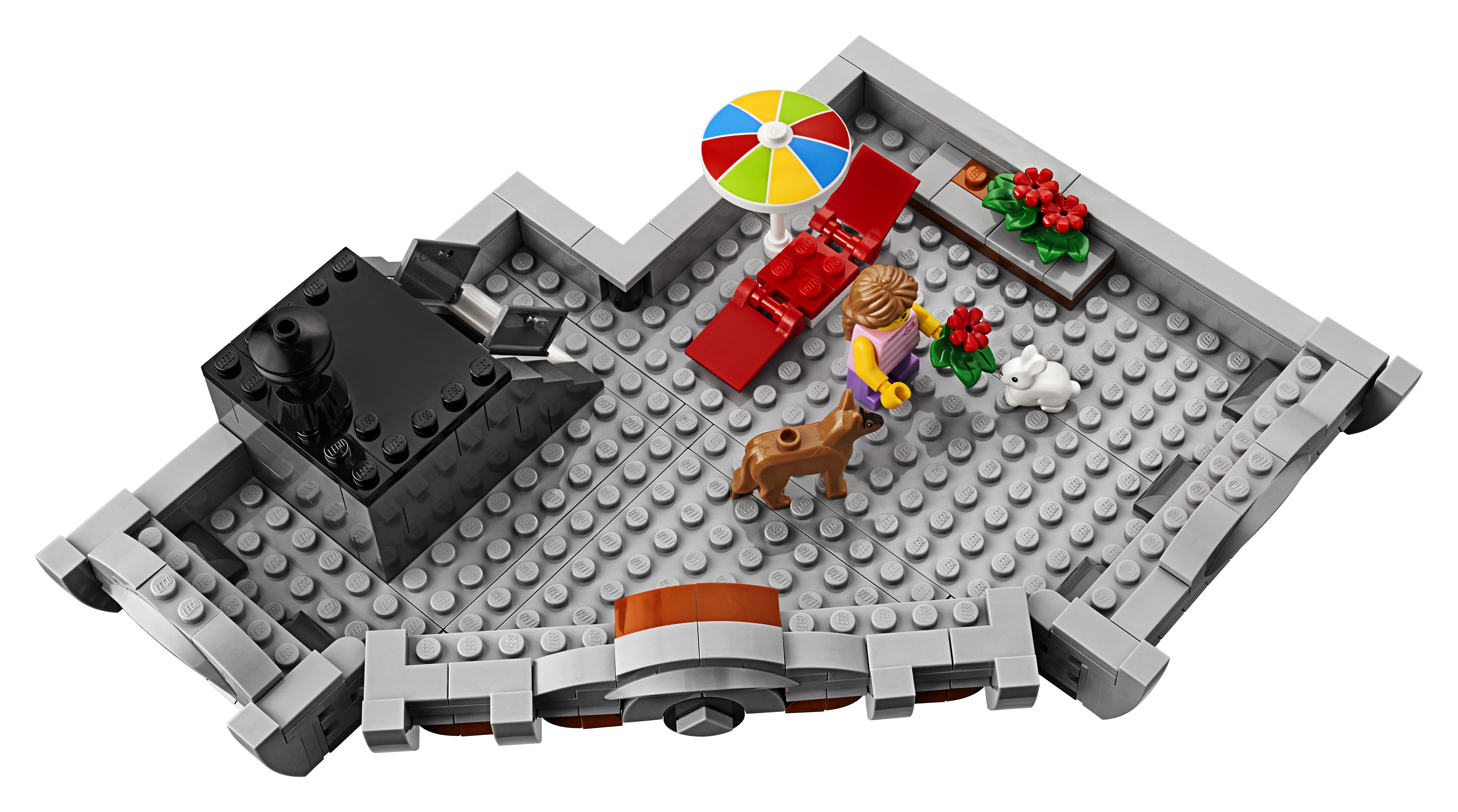
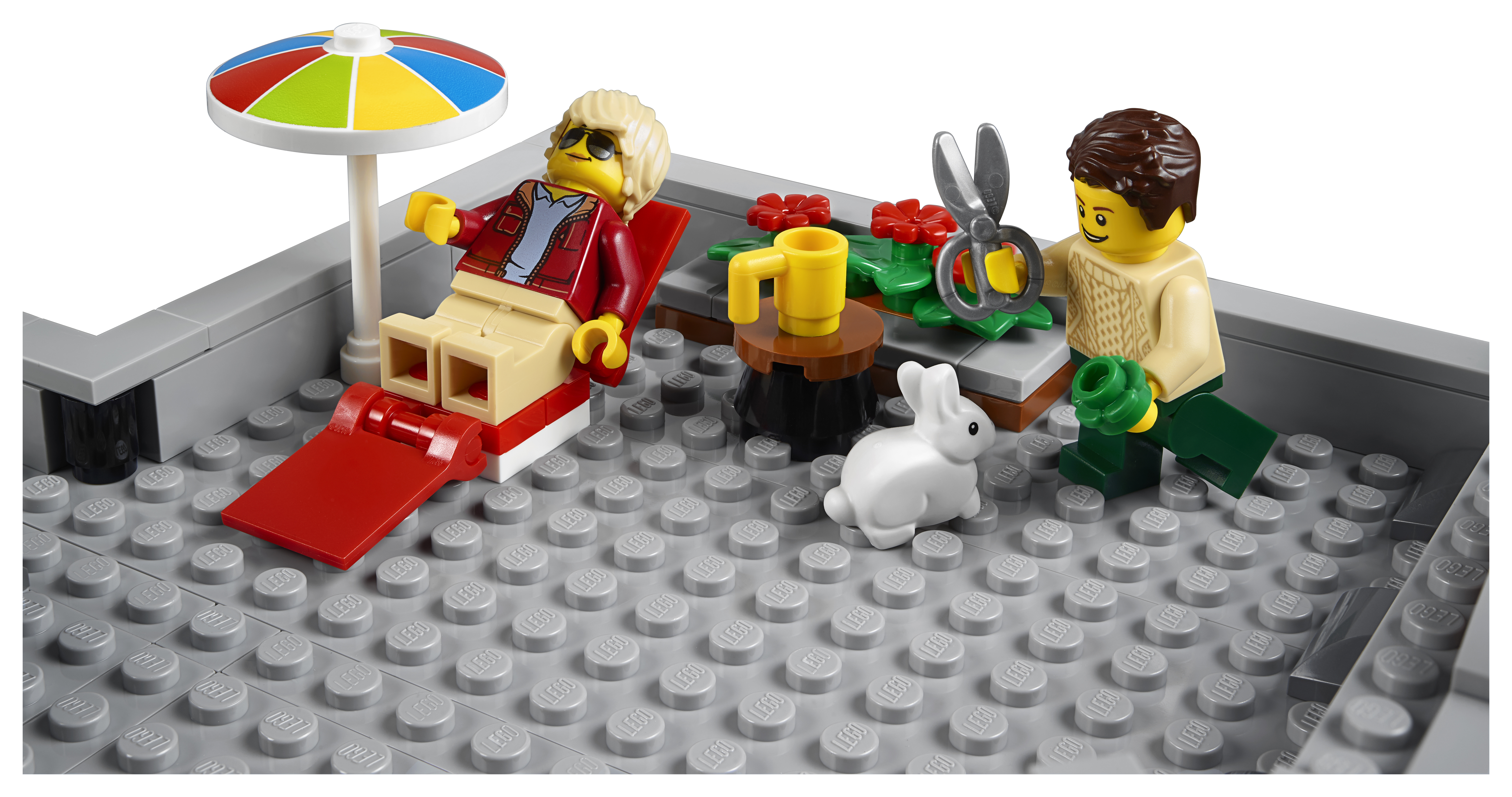
The last bag set contains the roof section. This features a door to the roof and a pool recliner with an umbrella for someone to tan on the roof, a flower bed and the rounding off of the building’s top. There are a lot of small pieces to put together in this, with 24 quarter-round tiles used for decoration on the front, along with 24 of the new 1×1 Roof Tile, of which there are 80 in the set. The set also features a number of other new(er) parts, such as 6250018: Plate 1X2 W/ Vert. Tube and 6217876: Tile 2X2, W/ Deg. 45 Cut. MOC’ers will love adding these parts to their collections.

In summary, if this were my first modular building, I would be enthralled. I think the reason people have had so many negative comments around the set is because there are now so many other sets, and MOC’s, out there. One other thing to remember is that many of the modular have very little interior detail, as mostly these are used as display pieces. I enjoyed building the set and will recommend it to anyone. The only real downside of the set is the price, with less than 100 parts more than the Downtown Diner, it costs R600 more than the previous release. A lot of people will hope this set will be released to stores other than the LEGO® Certified Store so it can become available on sales.

21315 – Ideas Pop-Up Book

Reviewed by Chris McGee (SAFOLs Member, jhbLUG Member)

Simple but fantastic…

A couple of years back I joined the LEGO® Ideas website to discover a wealth of great designs and builds. The main reason for this was due to the Ideas set 21305 which got me into the LEGO® lifestyle again and from the instruction manual realized that this was fan made and that more MOCs were on the site waiting to be discovered.

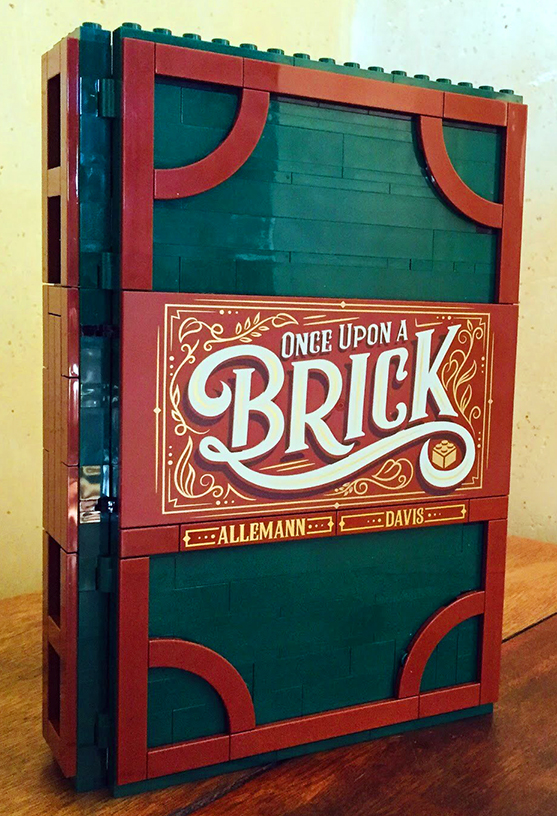
My first encounter was aimed at following JKBricksworks (fan designer Jason Allemann who designed the maze) and there I found and adored the pop-up book design. The design itself was basically a tan cover with brick built writing across the front and spine of the book. The book even contained a latch with which to keep it shut. The entry was a joint effort with fellow fan designer Grant Davis. Needless to say, I was hooked on the Ideas concept.

When I heard that the set had been selected to become a set, I was thrilled, and couldn’t wait to see the final product. Needless to say, I wasn’t disappointed when the set pictures were released, as LEGO® had gone an extra step, and given a wonderful colour mix to the book. They had also put in parts for an extra story, bringing the part count to a healthy 859 pieces, and taking the theme towards a couple of well known fairy tales. The price point then is very good, with nothing in the set needing to be licensed or any unique molds, and retails at R1,199.99.

I was sold instantly by the look and theme which reminds me of medieval times, and really hoped the build would meet the expectations.

The Build

The book part of the build has a lot of very similar pieces and colours, making the numbered packets very handy (packets 1 through part of 3 build the book cover and the tan ‘pages’). This build was not as repetitive as expected given the look of the book, and gave me enough turns to keep me intrigued. I would suggest that one avoids building the book at night as the contrast of the black and dark green pieces used therein can make you life a bit difficult in bad light.

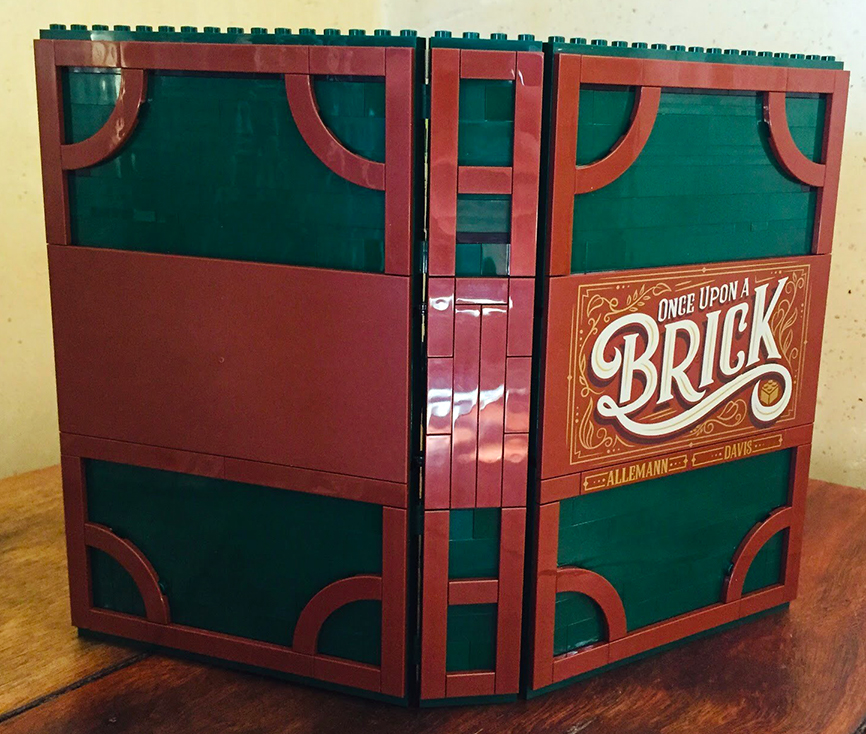
The book is nicely designed to effectively open and shut without becoming misaligned after repetitive use. In fact, it almost feels simple in its construction, making me question why nobody has really done/attempted this before (from a LEGO® stand point). The exterior of the book is beautifully finished with a brown trim and great printed parts. The main front tile is just amazing with its ‘Once Upon A Brick’ title, and slightly gold printed detail. The inclusion of the fan creators names as additional tiles is also a lovely touch by LEGO®.

That then puts the pop-up mechanism up front, and this again is simple yet fantastic in how it opens up each time with such smooth, fluid movement. The pop-up displays are also nicely suited to the main colour backing being dark green.

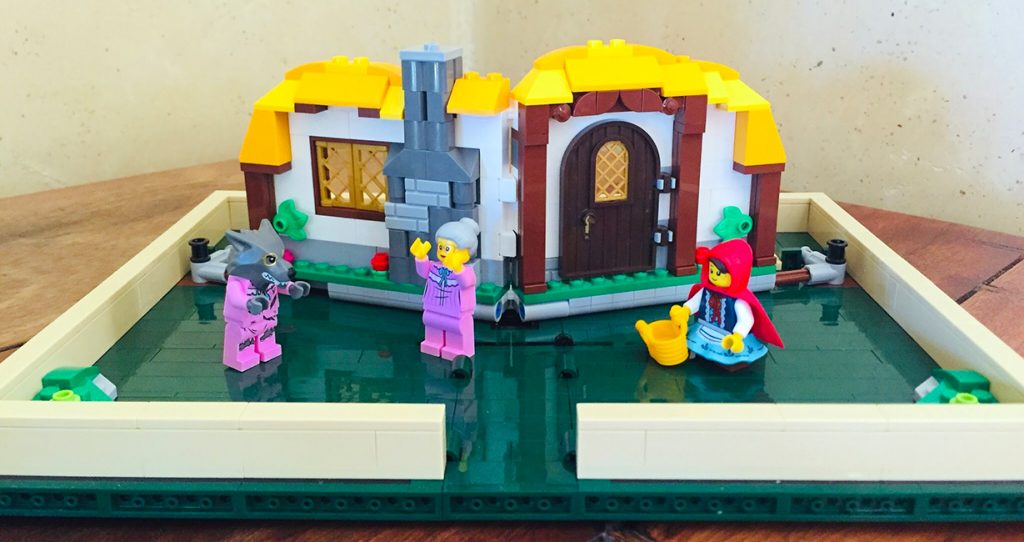
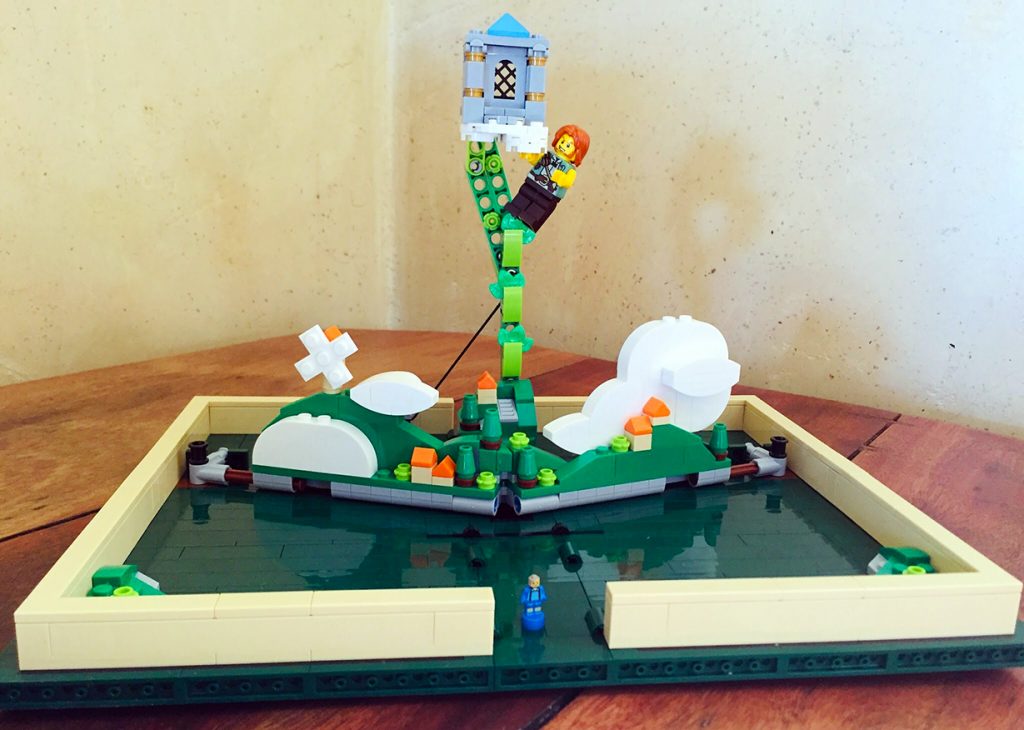
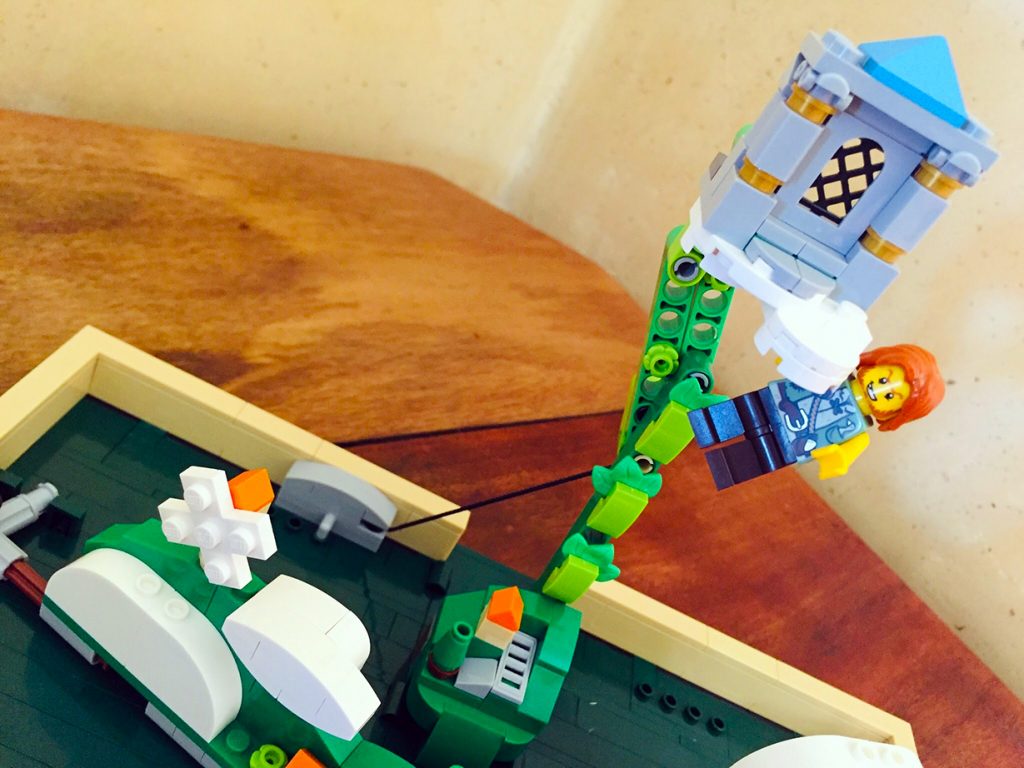
The inclusion of two stories was a lovely touch. Little Red Riding Hood was the first within packets 3 and 4, and Jack and the Beanstalk coming in packets 5 and 6. Both have been carefully planned to fit the specifications that would allow for a seamless book opening and closing experience. The specs referring to the width (closed) as well as height and length for the movement and storage. The cottage is a more traditional scene, and also comes with some interior props to have fun with. The beanstalk though has an unusual mechanism, which again works excellently given its nature.

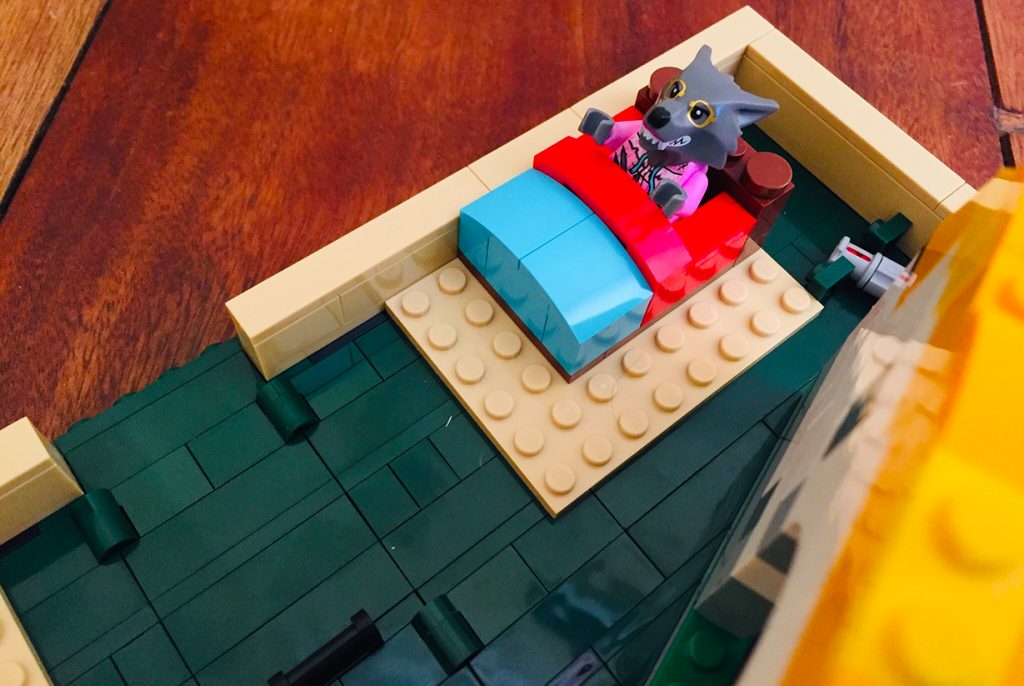
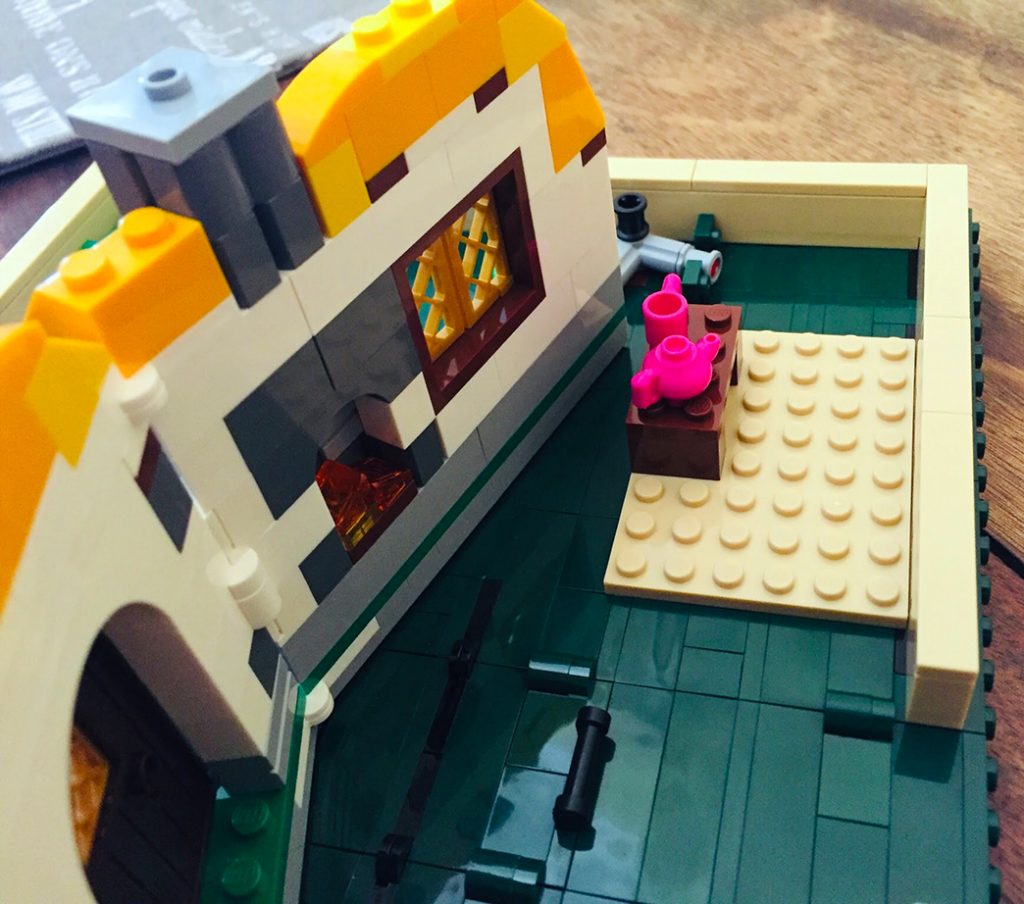
The colours across both the builds work well with the main book cover and given how these actually stand out, it is easy to understand why the dark green was chosen vs the original tan. Some special side builds are provided within each scene. The cottage gets a built bed and coffee table with a matching pink mug and teapot. The beanstalk scene gets a number of microscale builds (houses, trees, clouds and a castle in the clouds) all of which bring the giant to a more believable size.

The Minifigures

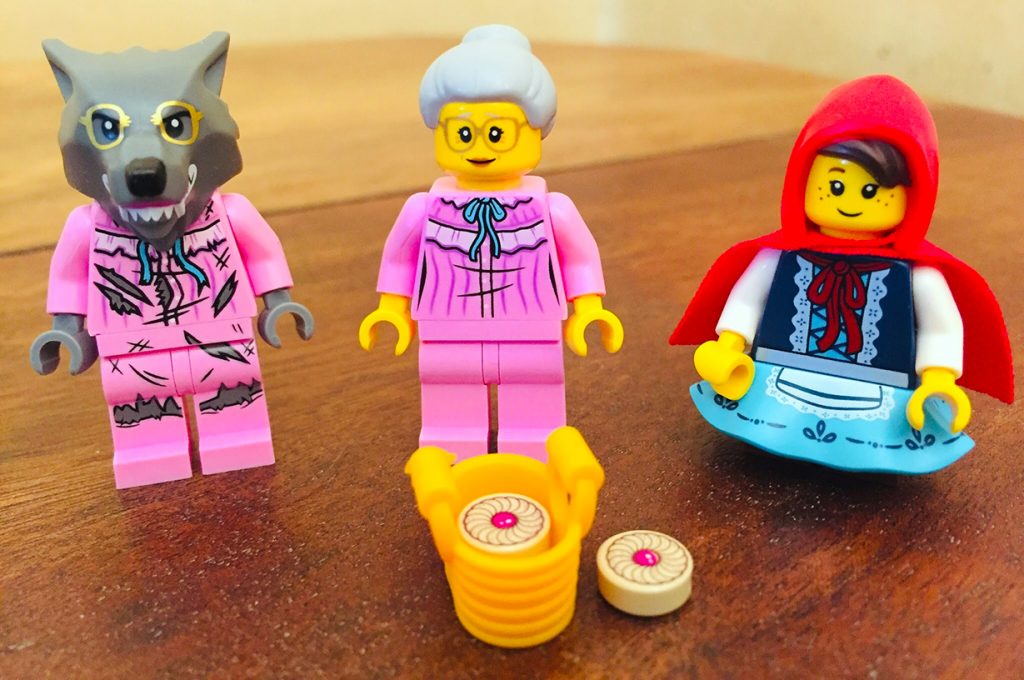
Yep, we also get some great, and unique minifigures for this one and key characters for each of the story builds. Red Riding Hood, her grandmother and the wolf (wonderfully disguised in broken reading glasses and granny’s pyjamas)are provided to the cottage scene. Red comes with a lovely printed dress piece (same mould as the used for Minnie Mouse in the Disney collectible minifigure series), as well as a cloth coat piece, and a dual-molded hood in red, with a strip of hair across her brow. There are also some cookie printed 1×1 round tiles and a basket included for accessories to the scene.

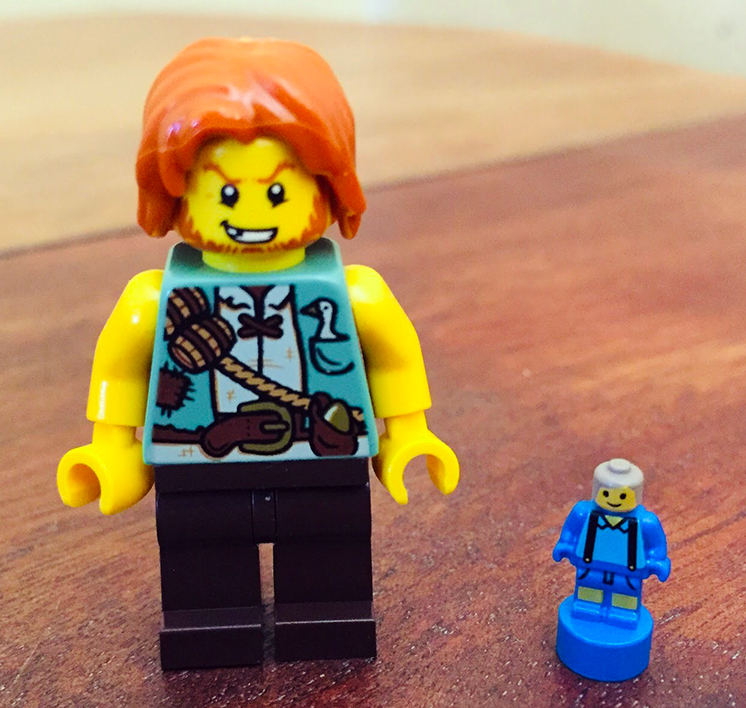
While with the beanstalk scene, we get a great nanofigure representing Jack and then a standard minifigure as the giant, each with some great unique printing (keep your eyes peeled for the golden goose). Although no accessories are provided for these characters (almost wish there was a golden egg and/or something to represent magic beans in here), the figures provide a great ensemble to the micro-scale scene.

The Verdict

These are the type of sets which I really enjoy, as it effectively spawns creativity while building. Around halfway through building the cottage I was thinking of what I would like to do as a pop-up display, and my mind was filled with various ideas. Honestly, this ranks in my top 3 sets of the year that I have had the pleasure of building, and any items I have mentioned which have negative connotations, I see as ‘nitpicking’. This is a great set, and a must have for anyone, and if I may be so bold, an ideal set to get multiples of.

40341 – Xtra Polybag

Reviewed by Rakesh Gosai (SAFOLs Exco, NMBLUG Member)

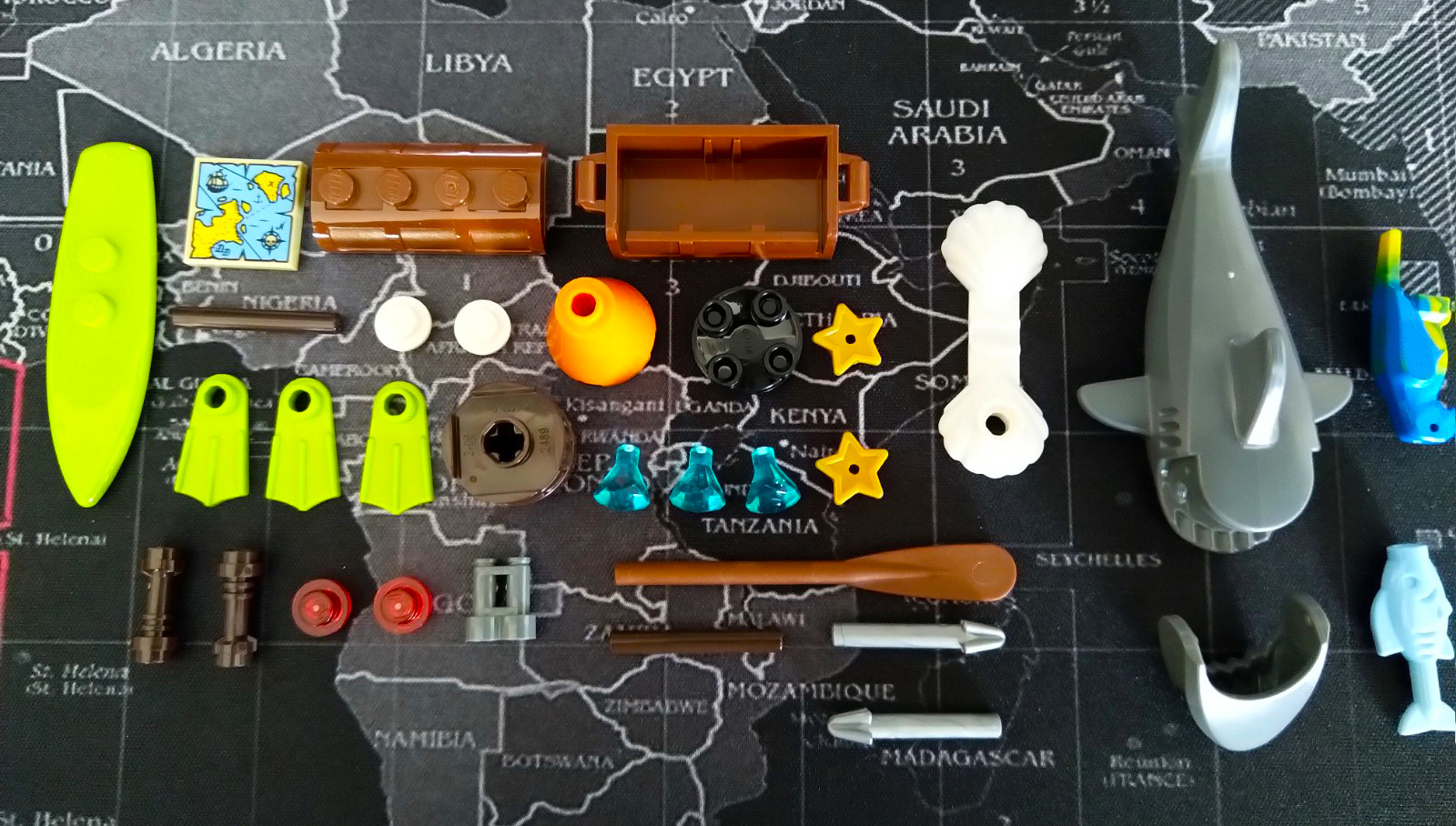
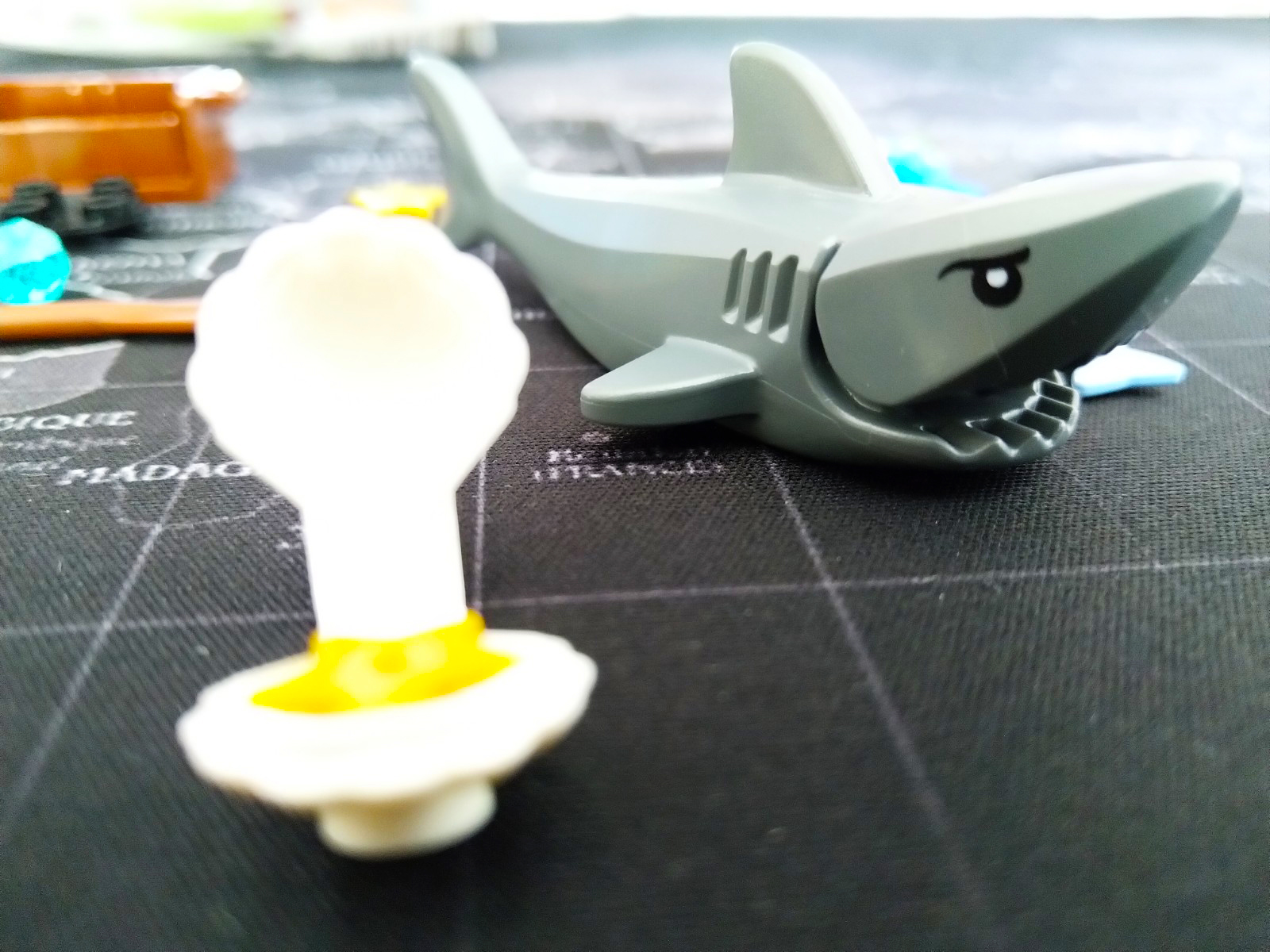
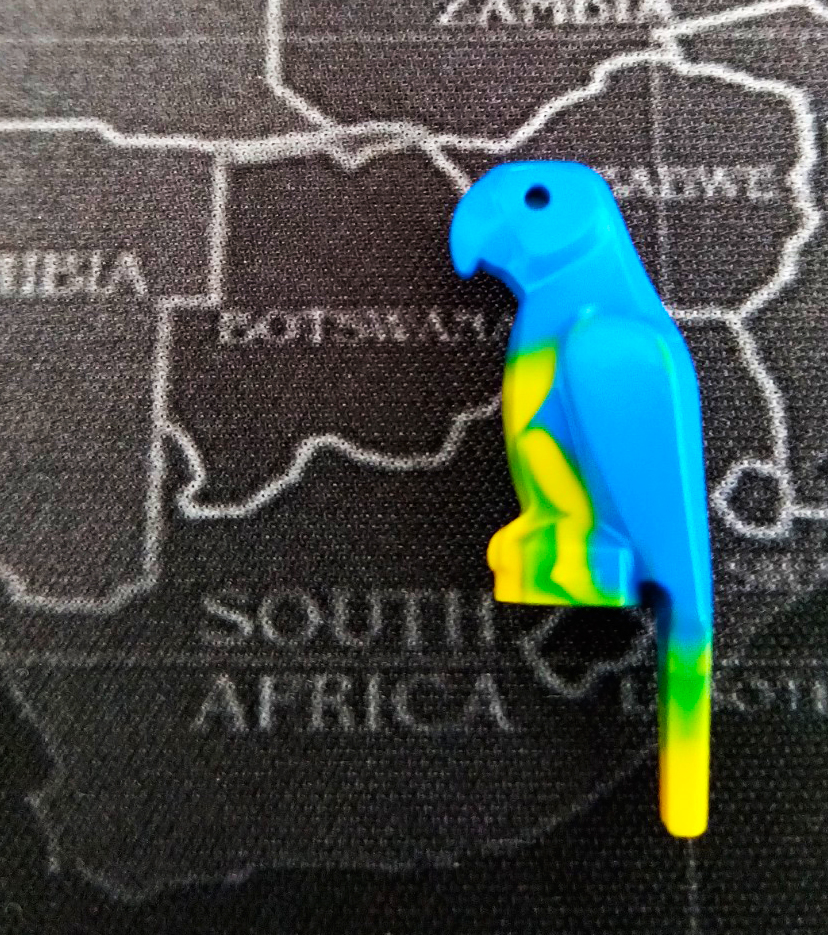
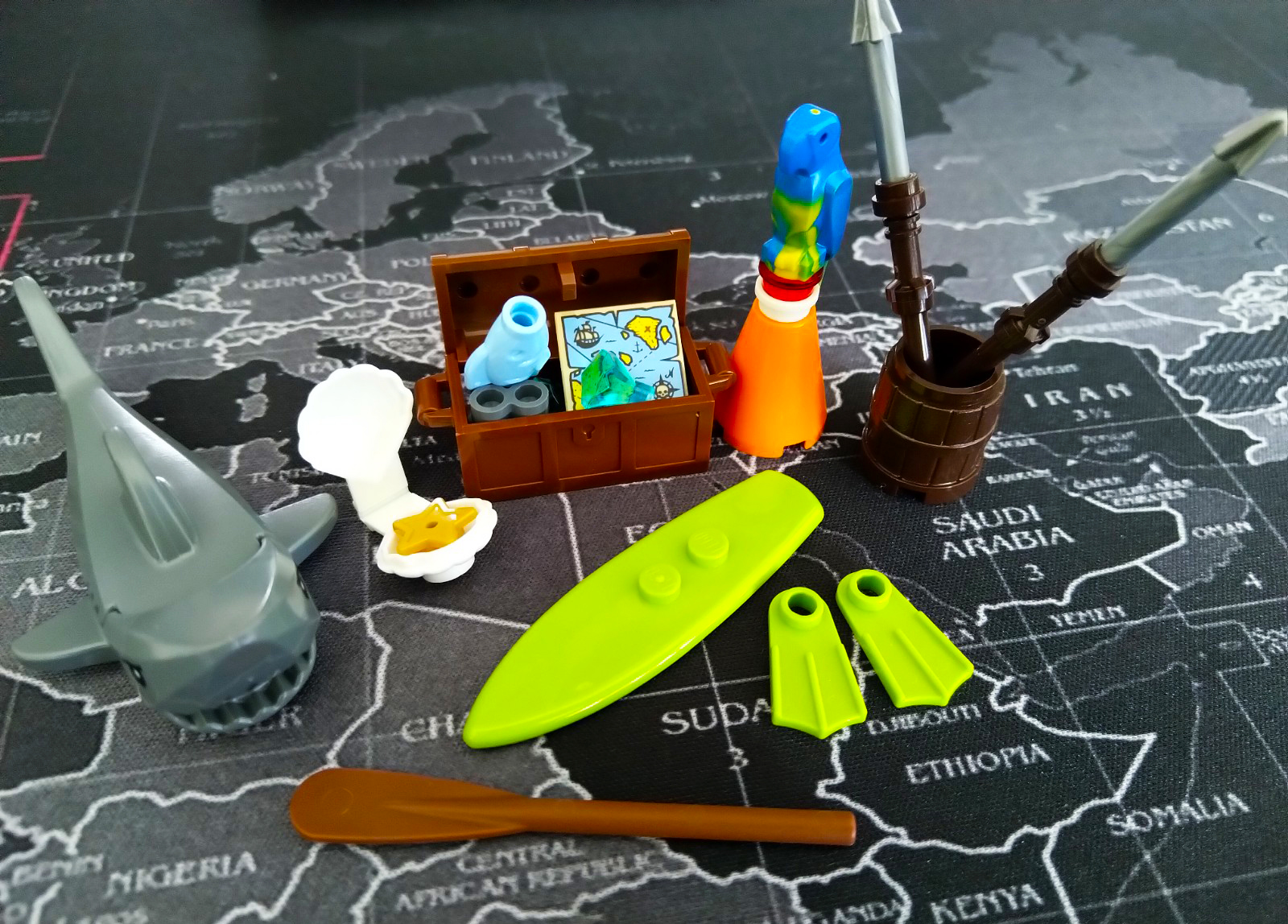
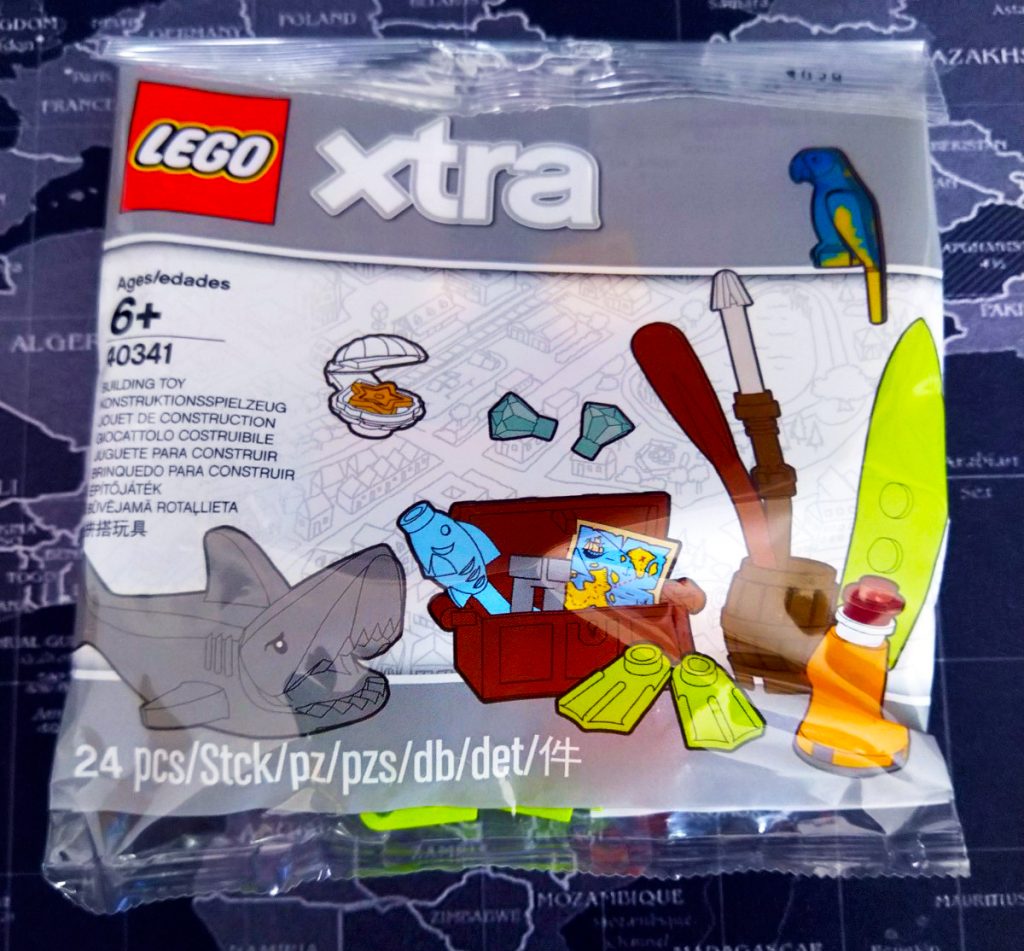
LEGO has recently re-introduced accessories packs. Receiving this before it got released was a delight. LEGO previously released the first five accessory packs and three Xtra-themed play-mats, but today we’re looking at the 40341 Sea Accessories. It will be available in January 2019.The packs include only accessories with no minifigures.

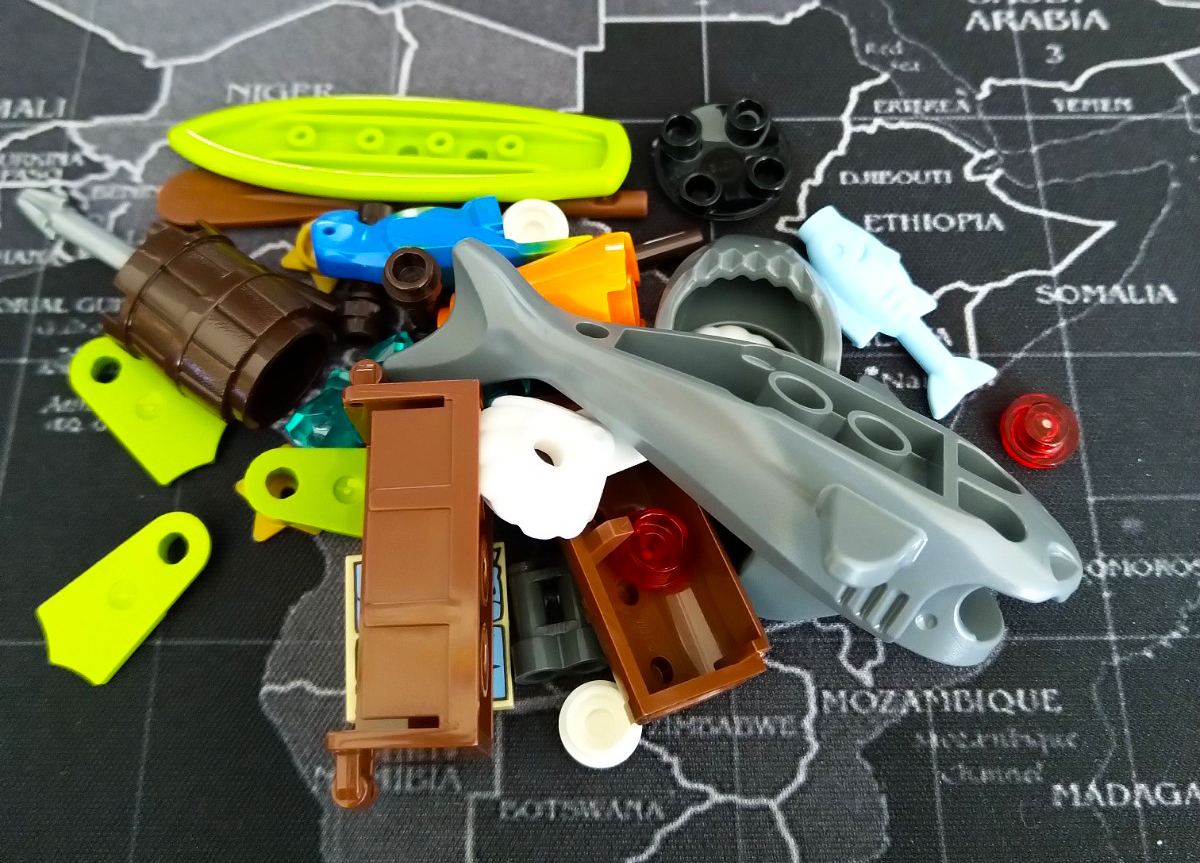
These are the 32 elements included in the pack:

  1. Treasure Chest (Top & Bottom)
  2. Barrel
  3. Shark & Lower Jaw
  4. White 1×1 Round Plate x 2
  5. Red 1×1 Round Plate x 2
  6. Pirate Map
  7. Dark Brown Sabre Hilts x 2
  8. Parrot
  9. Spear x 2
  10. Binoculars
  11. 24 Facets Jewel x 3
  12. Stars x 2
  13. Fish
  14. Surfboard
  15. Oar
  16. Clamshell
  17. 4L bars x 2
  18. Orange Cone
  19. Flippers x 3
  20. Plate 2×2 with Round Bottom

By far my two favourite elements are the Parrot and the Shark, one can never have too many of these in your collection. I’m glad that LEGO has been issuing themed-based accessory packs. It gives immediate access to some Xtra elements to add to your collection! The LEGO Xtra 40341 would go together nicely with the LEGO Xtra Sea Playmat 853841.

75954 – The Great Hall

Reviewed by Suzette Coetzer (SAFOLs Member, zaLUG Member)

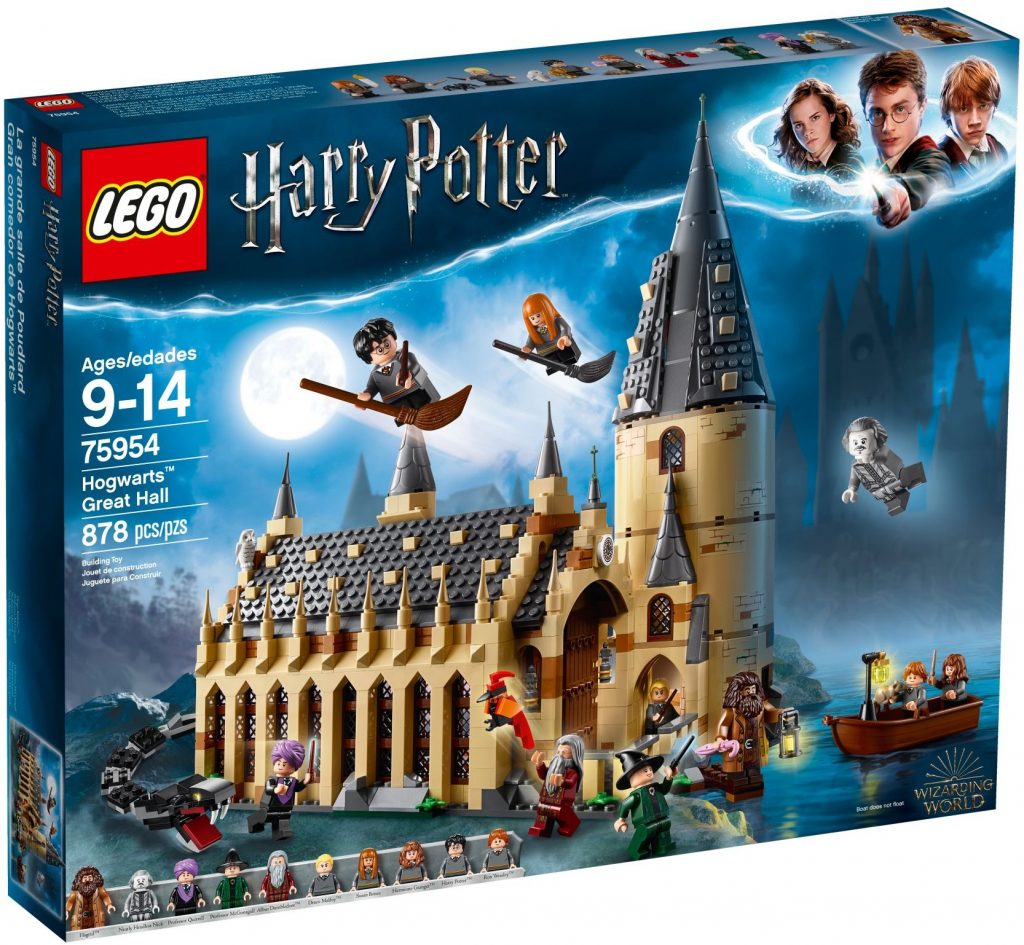
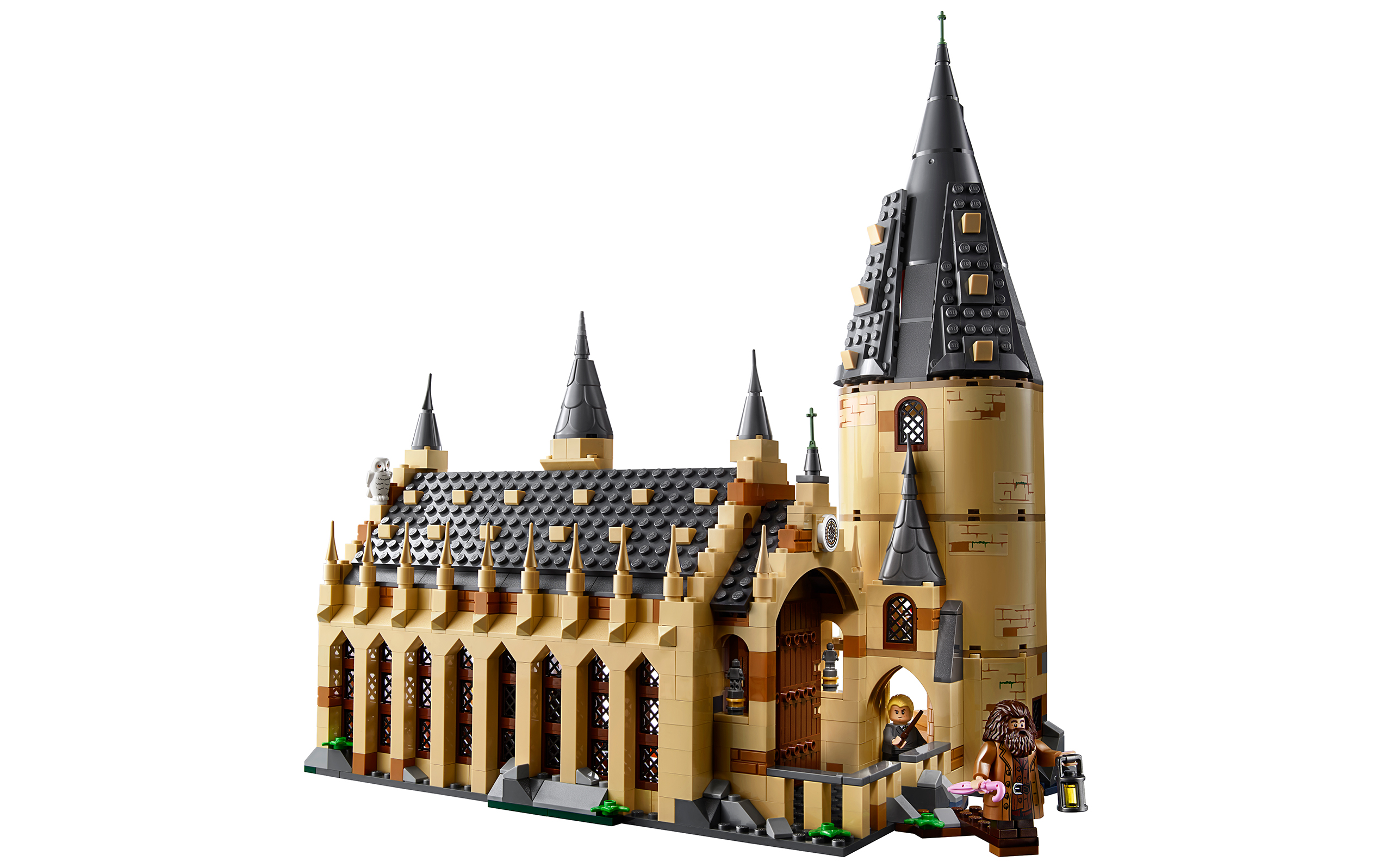
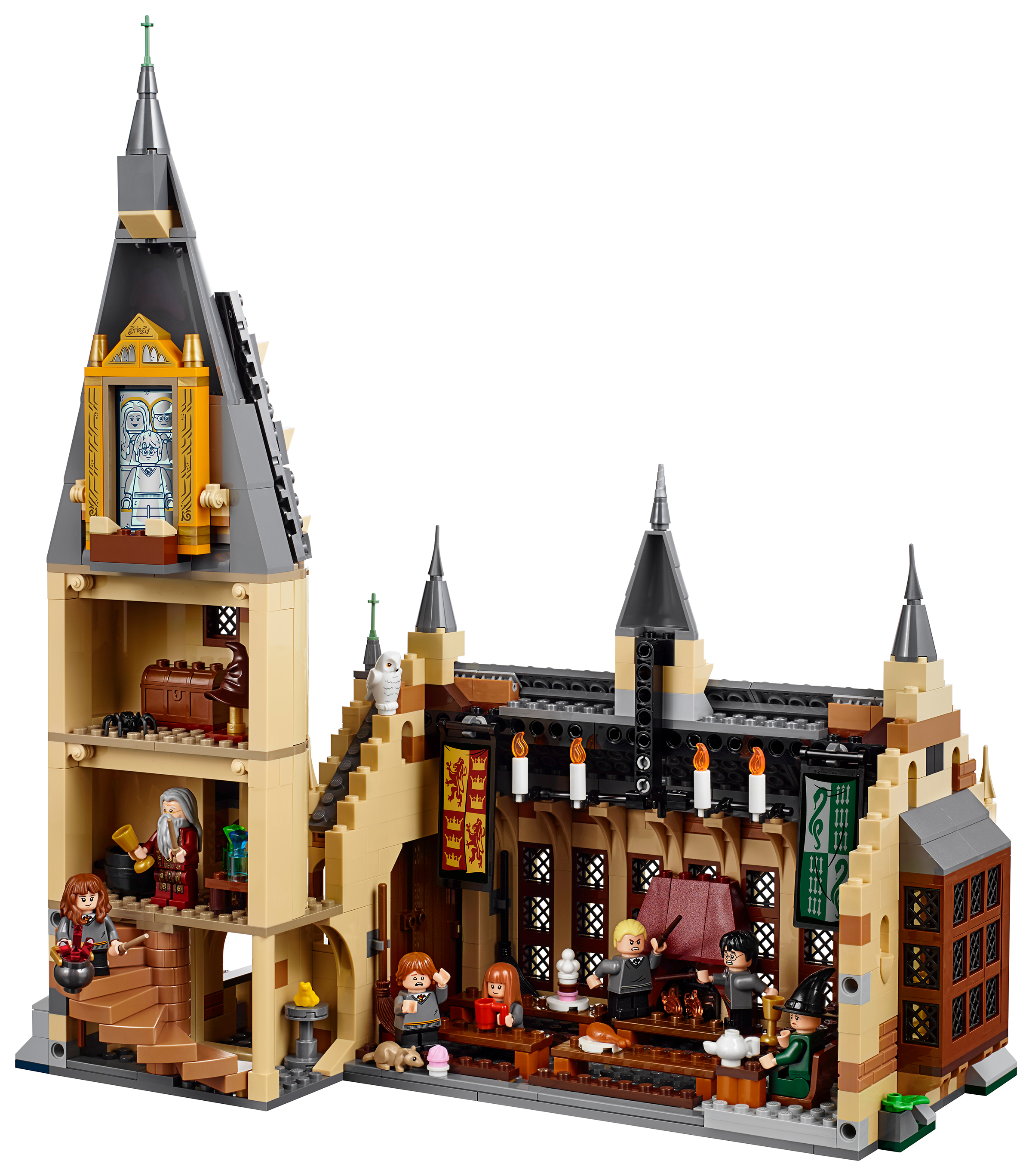
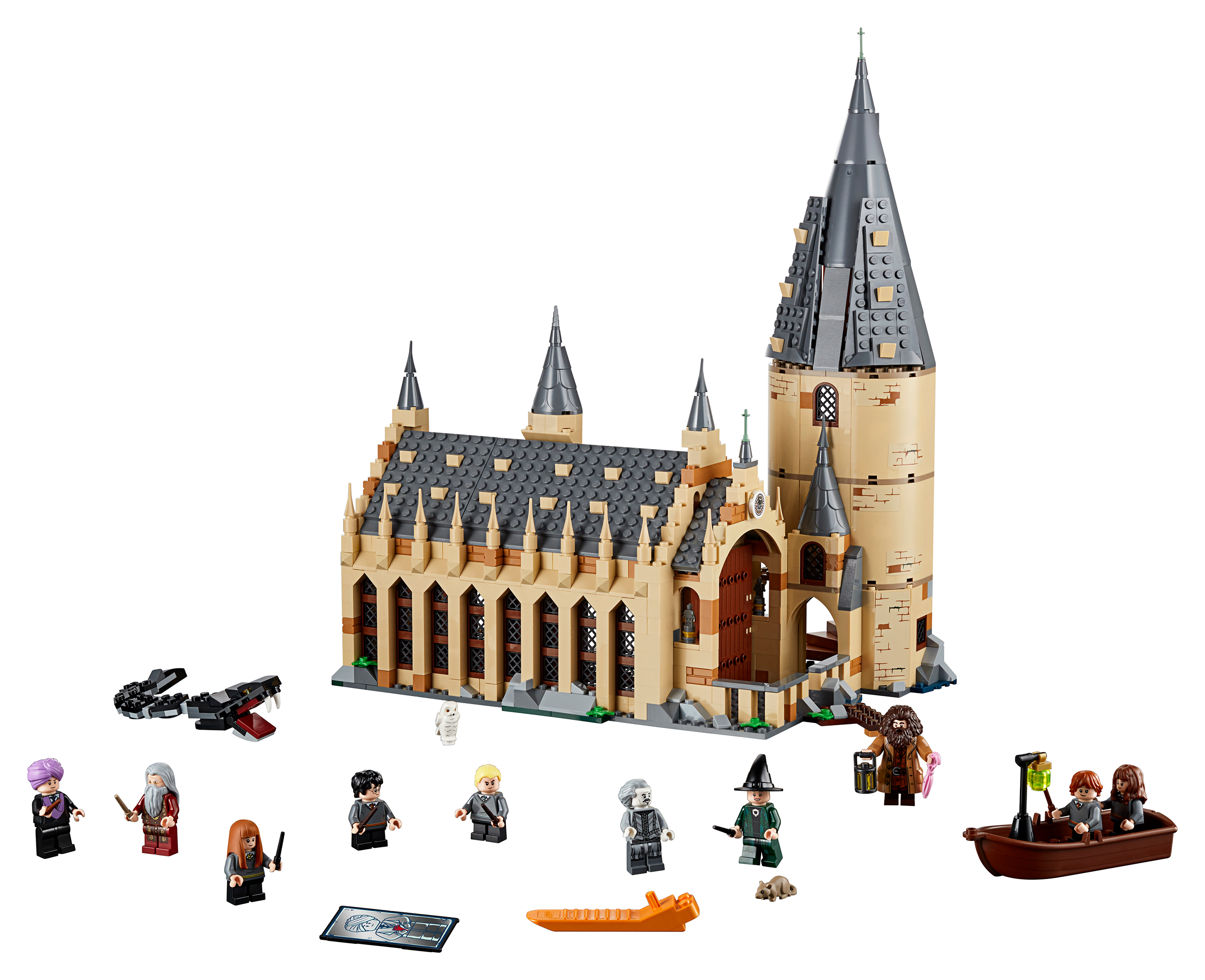
The Great Hall is a magical room in Hogwarts School of Witchcraft and Wizardry, with an enchanted ceiling to look like the night sky. It held fantastic feasts and events such as Halloween, Christmas and the Triwizard Tournament; and holds significant memories of both tragedy and triumph such as Cedric Diggory’s memorial and the defeat of the Darkest Wizard of all time, Lord Voldemort. As a huge Harry Potter and LEGO® enthusiast, I was in ecstasy when LEGO® released The Great Hall and could not wait to start building a part of, what has been for me for many years, the greatest place in the Wizarding World.

It started out quite straightforward, the same way the modular buildings usually do, except that it is not built on a base plate but on different shapes and sizes of plates. As the build progressed I started recognising, with each step exactly what is was that LEGO® had tried to re-create and marvelled at the cleverness of the techniques used to get the effects just right. I also enjoyed discovering the distinct details that the designers added by incorporating more than one movie/book into this set and of course, to unearth new parts that LEGO® had developed is essentially an AFOL’s Holy Grail. I was, however, a little perplexed with the build of the Basilisk, which felt neglected in comparison with the Phoenix (albeit the latter is smaller and quite lovely) and I have decided that the Basilisk will have to undergo some modifications to be complementary to the rest of the set’s techniques and design. And since I “ooh’d” and “ahh’d” so many times during this build, it took me about 3½ hours to complete a set with only 878 pieces.

I have been a Harry Potter fan for many years and I must say that building these new LEGO® Harry Potter sets has been quite an enjoyable experience. I am sure that most would enjoy these builds as well, although the full experience can only truly be attained by a Harry Potter fanatic who has the knowledge to spot the hints of references to events that the Muggle-eyes overlook ?

LEGO® Ideas 21311 Voltron

By Barry Kay (SAFOLs co-founder, CapeLUG Exco, Batman … Ssshhhh!)

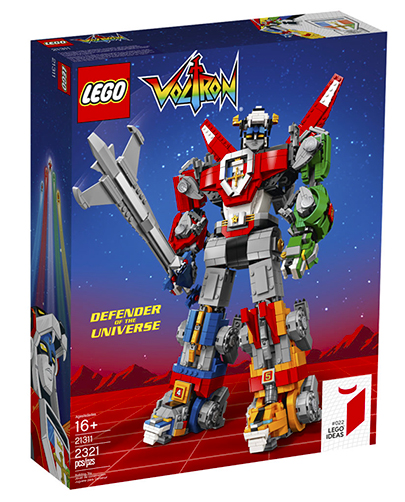
When I first saw this set was accepted by LEGO® Ideas I was overjoyed. Childhood memories of watching the cartoon show on TV came flooding back. When I received the delivery of the set, I just left the box standing sealed for a while so I could just admire it – the largest LEGO® mech released to date.

Needless to say, a LEGO® set is for building and so I began.

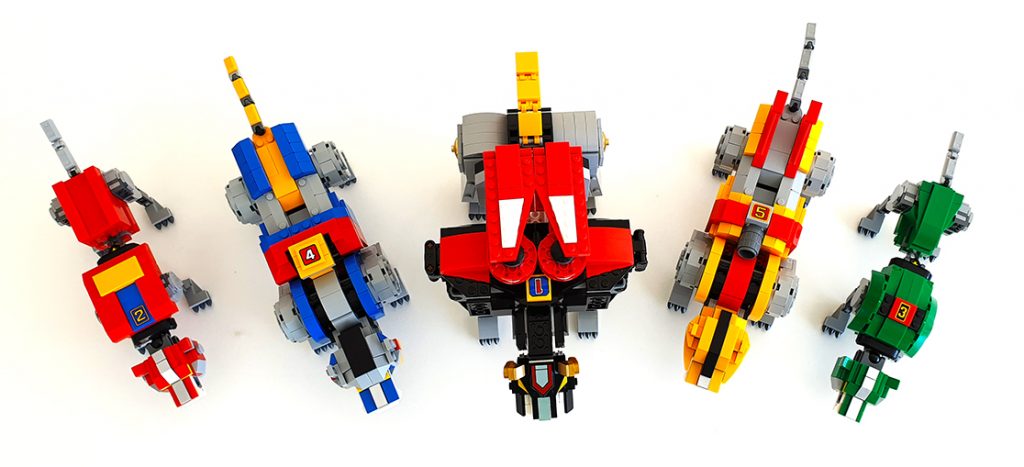
The box consists of sixteen packets and six instruction books. One book for each lion and the sixth for the mech assembly. There is a small sticker sheet with five 2×2 plate stickers numbered from one to five. These are used on each of the lions.

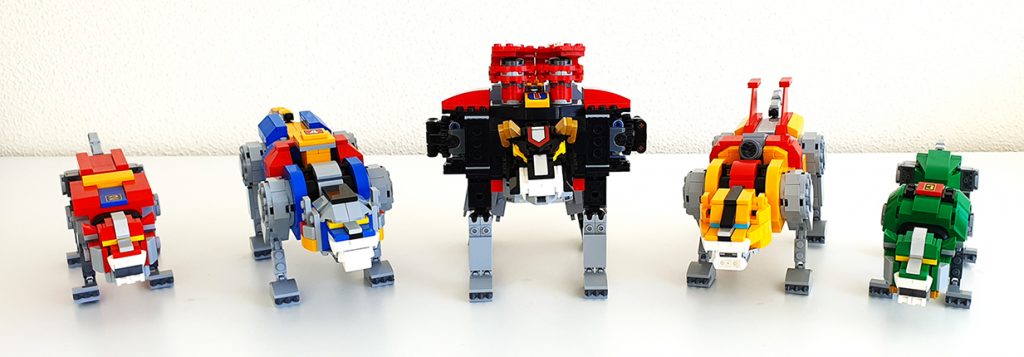
The first two builds are the yellow and blue lions. I like the way LEGO® incorporates Technic elements and building styles into system sets these days. It helps for a stronger sturdier model that does not fall apart so easily. At first it seems like you are just putting together a lump of bricks, but as you continue the build, the lion starts to take shape.

The base body of the yellow and red lions, which make up the legs and feet, are the same build but what is great is that each lion has different features that take away any monotony of building the same thing a number of times.

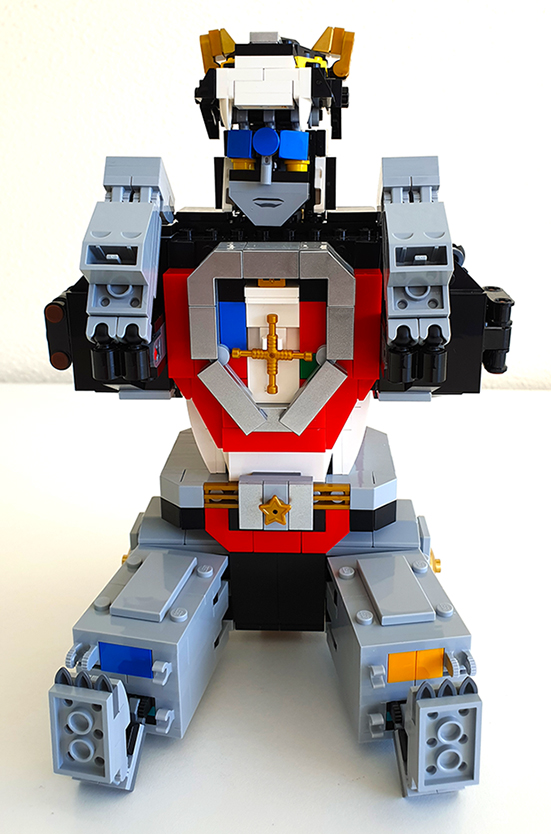
The third build is the black lion, which is also Voltron’s head and torso. This is also a very solid build – the only downfall being Voltron’s face that can fall out very easily. The different elements used for the features are great especially the gold socket wrench as the symbol on Voltron’s chest.

The last two lions, green and red, are smaller and quicker to build than the others. These lions make up the arms.

Seeing all the lion’s features develop is a rather fun use of the SNOT technique which gives the lions an all-round solid body and great look.

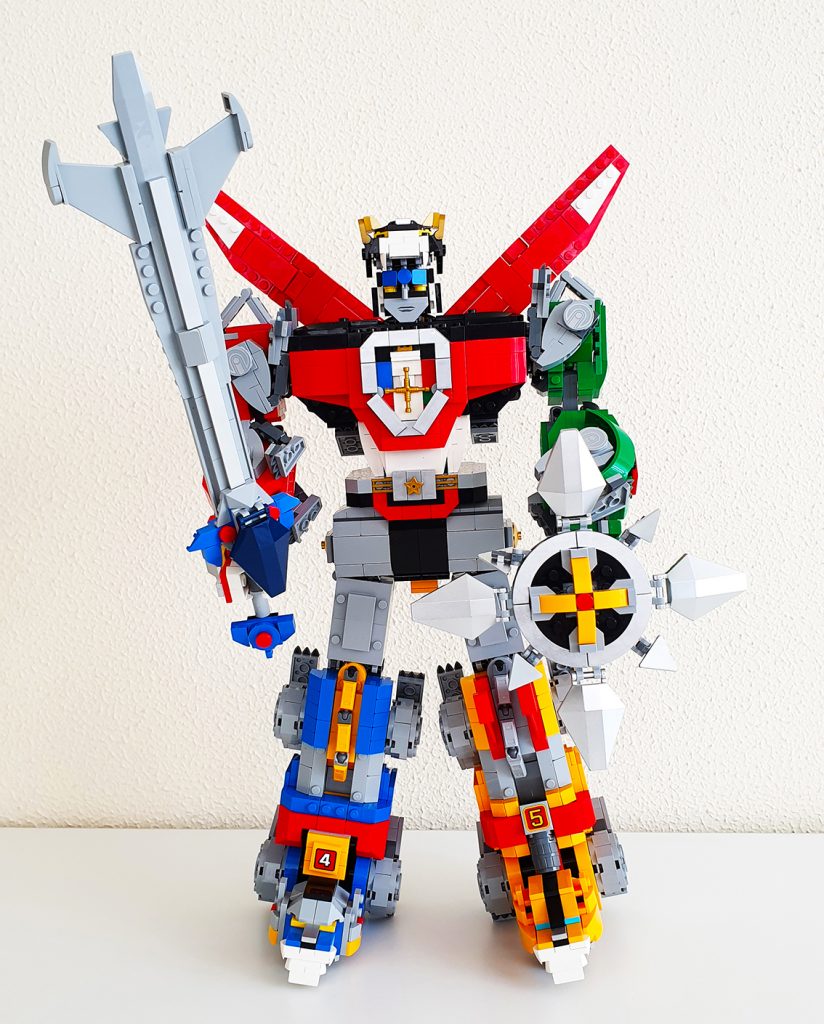
The last book gives a little information about the Voltron cartoon show as well as the designers of the set. It starts with the building of Voltron’s sword and shield which is a really quick but fun little build.

Then for the assembly. It amazed me how easily the lion’s legs swivel around into position and each one clips so effortlessly into place to form into Voltron.

I really enjoyed the whole build and would highly recommend it to any mech fan.

As for playability, the lions are solid enough for gentle play, bearing in mind to be careful of Voltron’s face on the black lion as mentioned above. Once fitted together as Voltron, it should remain as a display piece due to it only having minimal manoeuvrability in the arms, and pieces tend to fall off if you pull and push the arms to move around.

The set retails at around R3200 and is an all-round great build.

75230 – LEGO Star Wars Porg

By Marick Hornsveld (SAFOLs Member, Founding member of CapeLUG – The Western Cape LEGO User Group. Loves Technic, Creator vehicles, and dragons.)


The set is divided into six numbered bags, each containing a small number of parts. The box is modest, but the front cover image is quite a bit larger than the actual model.

The build starts with the inside base around which the body is to be built. I really like how regular bricks and pieces are combined with studless and studded Technic beams in this set. All LEGO pieces, no matter what theme they are from, are part of the LEGO universe, and I therefore think that combining Technic with regular bricks and pieces makes sense, despite some fans’ resistance.

The set contains a number of interesting pieces (and some great Technic parts) that have lots of potential for use in MOCs, especially if you are planning to build in white or orange.

SNOT techniques are used to great effect in this model to create an organic bird-like shape that looks interesting and is aesthetically pleasing from all sides. The way that the feathers are created is also fantastic – it looks very real.

The build itself is uncomplicated, and aside from the clever use of SNOT techniques and feathering, the build offers no interesting or surprising techniques. I spent just over two hours putting the set together, and all in all it was an enjoyable build.

Different techniques are used around the body, so the build doesn’t feel repetitive.

The final model is quite sturdy, although I won’t recommend it as a toy for kids. This is mainly a display model. It does make a good companion to last year’s BB-8 droid, especially because their colours match. They are also similar in size, which does mean that the scales of the two models are vastly different if compared to the movie characters.

Pressing on the tail of the Porg makes the mouth open and wings flap, although the wings don’t return to their original position entirely. Moving the mouth does give the Porg a cute facial expression.

At the current retail price, given the piece count, and despite some of the nice pieces the set includes, it is a bit on the pricey side and would therefore appeal mainly to Star Wars fans looking for a nice display model to add to their collection, rather than a purchase for parts.

The Star Wars franchise has received criticism for ‘creating’ the Porg, with fans saying that it is purely a mechanism to sell merchandise. Whether or not that is true, the island where The Last Jedi was filmed has a very large colony of Puffin birds. Rather than trying to digitally remove the birds from the film, the producers digitally altered the Puffins, turning them into Porgs, and even giving them a small storyline.

To summarise: 75230 Porg is a quick, easy build, with some interesting parts, but isn’t a bargain. It makes a nice display model.